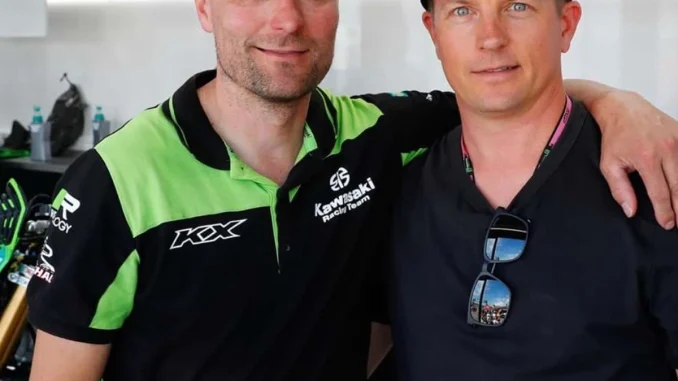
Kimi Räikkönen has enjoyed recent success as a world championship–winning team principal with Kawasaki in the MXGP and is aiming to repeat that achievement in 2026 under the new regulations.
Kimi Räikkönen has enjoyed recent success as a world championship–winning team principal with Kawasaki in the MXGP and is aiming to repeat that achievement in 2026 under the new regulations. Best known to millions of fans as a Formula 1 world champion, Räikkönen has quietly carved out a new chapter of success away from the grand prix spotlight, proving that his competitive instincts extend far beyond the cockpit.
Since stepping into a leadership role within Kawasaki’s MXGP programme, Räikkönen has approached team management with the same no-nonsense mentality that defined his driving career. Rather than relying on reputation alone, he has been closely involved in shaping the structure, culture, and long-term vision of the team. That hands-on yet understated approach has paid off, culminating in a world championship that underlined Kawasaki’s strength in one of the most competitive eras of modern motocross.
Räikkönen’s influence has been particularly evident in the way the team operates day to day. A strong emphasis on preparation, clear communication, and trust between management, engineers, and riders has helped create a stable environment in which performance can flourish. Formerly known for his calm demeanour under pressure, Räikkönen has translated that trait into leadership, allowing the team to remain focused even when the margins at the top of MXGP are razor-thin.
The challenge now is to maintain that level of success as the championship prepares for significant regulatory changes in 2026. New rules are expected to impact technical development and potentially reshape competitive balance across the grid. For teams and manufacturers, adaptability will be key, and Räikkönen has already signalled that Kawasaki is approaching the upcoming changes with careful planning rather than short-term fixes.
Preparation for the new regulations has become a central theme within the team’s strategy. Development timelines, testing priorities, and rider feedback are all being aligned to ensure Kawasaki is not merely reacting to change, but using it as an opportunity to strengthen its position. Räikkönen’s experience at the highest level of motorsport has proven valuable in this respect, particularly when it comes to managing long-term projects under evolving rulesets.
Competition in MXGP remains intense, with rival manufacturers investing heavily in performance gains and innovation. Räikkönen is well aware that past success offers no guarantees, especially in a championship where conditions, tracks, and technical demands vary so dramatically from round to round. However, he has consistently stressed that pressure is an inherent part of elite sport, and one that the team embraces rather than avoids.
As the focus shifts toward the 2026 season, expectations around Kawasaki’s MXGP programme continue to grow. The goal is not simply to defend a title, but to build a foundation capable of delivering sustained success in a changing landscape. If recent results are any indication, Kimi Räikkönen’s transition from world-class driver to championship-winning team principal is far from complete — and his impact on motocross’s premier category may only be just beginning.



Be the first to comment