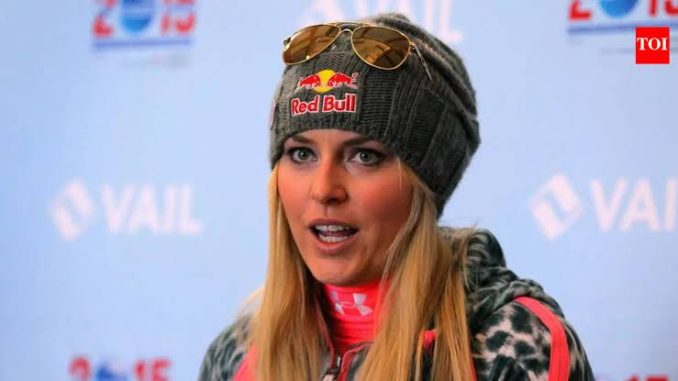
JUST IN: Lindsey Vonn cites two personal reasons for her return from retirement at 41 ahead of the Winter Olympics
Lindsey Vonn’s decision to come out of retirement at 41 has sent a ripple of surprise and admiration through the world of alpine skiing. One of the most decorated athletes in the history of the sport, Vonn had previously closed the chapter on her competitive career after years marked by extraordinary success, resilience, and physical hardship. Her return, however, is not driven by nostalgia or spectacle. Instead, Vonn has pointed to two deeply personal motivations that have drawn her back to the slopes as the Winter Olympics approach.
The first reason centers on unfinished personal ambition. Despite an illustrious career that includes multiple Olympic medals and World Cup titles, Vonn has been candid about feeling that her departure from competition did not fully reflect her love for the sport. Persistent injuries played a major role in her retirement, forcing her to step away before she felt emotionally ready. With time, recovery, and renewed physical confidence, Vonn now believes she can compete on her own terms. This return represents an opportunity to redefine the ending of her career—not as one dictated by injury, but as one shaped by choice, strength, and clarity.
Equally significant is Vonn’s desire to serve as a visible example of longevity and perseverance in elite athletics. In a sporting culture that often equates peak performance with youth, her return challenges long-held assumptions about age and capability. Vonn has consistently emphasized the importance of listening to one’s body, adapting training methods, and prioritizing long-term health. By competing again at 41, she is sending a message that experience, discipline, and mental resilience can be just as powerful as raw physical advantage.
Beyond competition, her comeback carries broader implications for women in sport. Vonn has long been an advocate for gender equity, athlete empowerment, and self-determination. Her re-entry into elite competition underscores the idea that athletes, particularly women, should feel free to redefine their paths without being constrained by external expectations. Whether or not her return results in podium finishes, the act itself reinforces the value of agency and self-belief.
Vonn’s journey back to competition has been deliberate rather than impulsive. She has spoken about taking time to reassess her motivations, rebuild her physical foundation, and ensure that her mental approach aligns with the demands of elite racing. This measured process reflects a maturity shaped by years at the highest level of sport and a deep understanding of what it takes to compete sustainably.
As the Winter Olympics draw nearer, attention will undoubtedly focus on Vonn’s performance. Yet the significance of her return extends beyond results. It is a story of personal resolution, resilience, and purpose—one that highlights how elite athletes can continue to evolve long after their first chapter appears to have closed. In choosing to return, Lindsey Vonn is not simply chasing medals; she is reclaiming a narrative that remains, for her, profoundly unfinished.


Be the first to comment