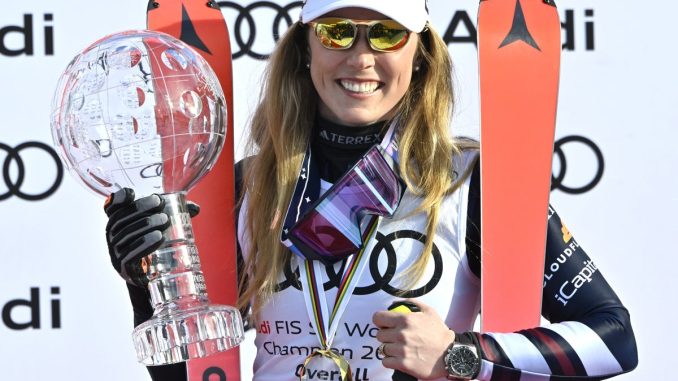
Mikaela Shiffrin is preparing for a different kind of challenge as she enters the 2026-27 Alpine Ski World Cup season, moving away from her familiar routine and embracing an approach that could reshape the next chapter of her remarkable career.
The American skiing superstar, widely regarded as one of the greatest alpine skiers of all time, has announced plans to compete in fewer slalom events while dedicating more attention to giant slalom and super-G. She describes the change as her “exploration season”, reflecting a desire to discover new possibilities rather than simply continue dominating her strongest discipline.
It is a surprising decision, particularly considering her extraordinary success in slalom. During the previous season, Shiffrin won nine of the 10 World Cup slalom races and secured another Olympic gold medal at the Milan-Cortina 2026 Winter Games. She also claimed her sixth overall World Cup title, equalling the women’s record.
With such impressive achievements behind her, remaining focused on slalom would arguably have been the safer option. However, the 31-year-old believes there is still more to accomplish.
“I’m not trying to do less because I care less. I’m trying to do something different because I still care SO much,” Shiffrin explained when announcing her plans.
The risks behind the decision
Although her new direction offers exciting opportunities, it also comes with considerable challenges.
Slalom has been Shiffrin’s greatest strength throughout her career, accounting for 73 of her record 110 World Cup victories. Reducing her participation in the discipline means giving up opportunities to collect valuable points and extend her already impressive record.
There is also the challenge of rebuilding confidence and consistency in giant slalom and super-G. While she remains highly competitive in giant slalom, super-G has proved considerably more difficult.
Her decision is particularly interesting given her previous experiences with serious crashes. A frightening accident during a giant slalom race in Killington in November 2024 left her with a puncture wound to her abdomen and a difficult recovery.
Consequently, returning to these disciplines requires not only physical preparation but also confidence and careful management of the risks associated with competitive skiing.
The potential rewards
Despite the uncertainties, Shiffrin’s decision could deliver significant benefits.
By reducing her slalom commitments, she hopes to create more opportunities for recovery, specialised training and improvement in other disciplines. This could help her become a more complete competitor while extending her career.
Her ambitions also extend beyond individual victories. Developing greater consistency in giant slalom and super-G could strengthen her chances of challenging for another overall World Cup title.
The timing is also important. With the next Winter Olympics taking place in 2030, this season provides an opportunity to experiment and develop without the immediate pressure of preparing for another Olympic competition.
Ultimately, Shiffrin’s latest decision represents more than a change in her racing schedule. It reflects an athlete who has achieved almost everything in her specialist discipline but remains hungry for new challenges.
Whether this experiment produces more victories or presents unexpected difficulties remains to be seen. One thing, however, is clear: Mikaela Shiffrin is not ready to stop pushing her limits.



Be the first to comment