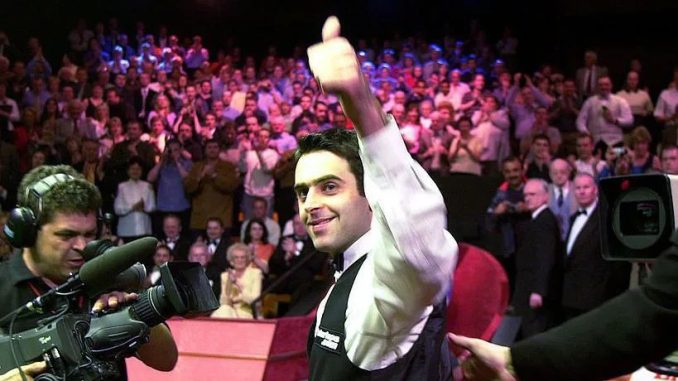
Ronnie O’Sullivan won his first World Championship title in 2001, after finding the Crucible a tough nut to crack in the early years of his career
The Crucible Theatre in Sheffield is now synonymous with snooker excellence, but its journey to becoming the sport’s most iconic venue was far from inevitable. Once dismissed by some as an unlikely home for a global championship, the intimate theatre has grown into the beating heart of snooker—its compact arena amplifying pressure, drama, and brilliance in equal measure.
When the World Snooker Championship moved to the Crucible in 1977, it marked a turning point for the sport. Prior to that, the tournament had no fixed home, drifting between venues and lacking a consistent identity. The Crucible, with its seating capacity of just under 1,000, seemed an unusual choice. Compared to vast sporting arenas, it felt almost too small. Yet that very intimacy became its defining strength. Fans sit close enough to hear every strike of the cue ball, every intake of breath, and sometimes even the quiet self-talk of players under pressure.
Early on, not every player embraced the venue. For young professionals trying to establish themselves, the Crucible could feel suffocating. The tight space, combined with the weight of expectation and the unforgiving format of long matches, made it a mental as well as physical test. Ronnie O’Sullivan, who would go on to become one of the greatest players in the sport’s history, was among those who initially struggled. Despite his prodigious talent, he found the Crucible a daunting stage in his early appearances.
That changed in 2001. O’Sullivan arrived in Sheffield with growing maturity and determination, and over the course of the البطولة he mastered not just his opponents, but the unique psychological demands of the venue. His victory that year—his first World Championship title—marked a personal breakthrough. It also reinforced the Crucible’s reputation as the ultimate proving ground, where raw talent must be matched by resilience and composure.
Over time, the theatre has witnessed countless defining moments. From dramatic final-frame deciders to records rewritten under the spotlight, the Crucible has become a place where careers are made and legacies cemented. Its consistency as the البطولة’s home has allowed traditions to flourish, giving fans a sense of continuity rare in modern sport.
Part of the Crucible’s magic lies in its contrast. The setting is modest, almost understated, yet the stakes are immense. Players walk a short distance from the practice tables to the arena, but the psychological journey can feel vast. The single-table setup in the latter stages intensifies the focus, ensuring that every shot carries weight.
Despite periodic discussions about moving the البطولة to a larger venue, many within the sport argue that doing so would risk losing something essential. The Crucible is more than just a building; it is an atmosphere, a test, and a symbol of snooker’s heritage.
What was once seen as an unlikely choice has become indispensable. The “dropout’s hangout,” as Sheffield was sometimes affectionately dubbed, now hosts snooker’s most prestigious event. And for players like O’Sullivan, conquering the Crucible is not just about winning a title—it is about proving you can thrive on the sport’s most unforgiving stage.

Be the first to comment