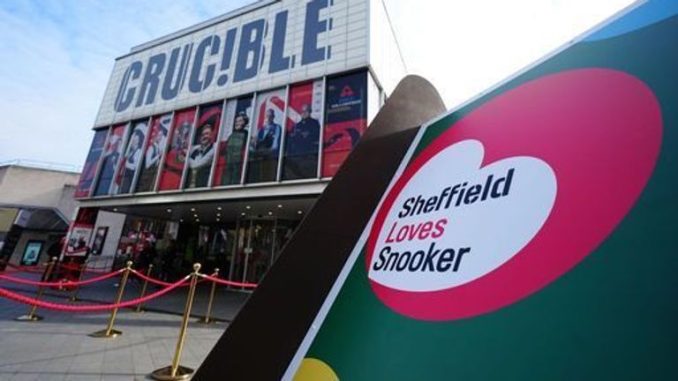
The future of the World Snooker Championship at the iconic Crucible Theatre has been the subject of intense debate after Barry Hearn warned that the tournament could leave its historic home after 2027. His comments sparked widespread concern among players, fans, and officials, as the Crucible has staged snooker’s most prestigious event since 1977 and is deeply woven into the sport’s identity.
Hearn’s warning was driven primarily by concerns over the venue’s size and facilities. The Crucible currently holds fewer than 1,000 spectators, a figure he believes is no longer sufficient for a global sport that continues to grow in popularity. He described the venue as “no longer fit for purpose,” arguing that the championship has outgrown its traditional setting and requires a more modern, commercially viable arena.
Financial considerations are at the heart of the issue. Hearn pointed out that other sports under his promotional umbrella, such as darts, are staged in large arenas with thousands of fans, generating significantly higher revenues and prize money. By contrast, the limited capacity at the Crucible restricts ticket sales and commercial opportunities. He has suggested that expanding the venue or building a new, larger arena—potentially holding up to 3,000 spectators—would be essential to keep the tournament in Sheffield.
The stakes are high because the current agreement to host the championship at the Crucible runs until 2027. Without significant upgrades or investment from local authorities, Hearn made it clear that relocating the tournament would be a realistic option. Possible alternatives have included international venues in countries such as China or Saudi Arabia, where financial incentives and modern facilities could transform the scale of the event.
Despite the strong business case for moving, Hearn has repeatedly acknowledged the emotional and historical significance of the Crucible. The venue is often described as the spiritual home of snooker, providing an intimate atmosphere that players and fans cherish. However, he emphasized that sentiment alone cannot dictate the sport’s future, insisting that snooker must evolve to remain competitive on the global stage.
The debate ultimately highlighted a tension between tradition and modernization. On one hand, the Crucible represents nearly five decades of snooker history and unforgettable moments. On the other, the sport faces increasing pressure to expand its global reach, boost prize money, and attract larger audiences.
In a significant development, a new agreement was reached in 2026 to keep the World Championship in Sheffield long-term, with plans to renovate and expand the Crucible. The deal includes increased capacity and upgraded facilities, addressing many of Hearn’s concerns while preserving the tournament’s heritage.
In conclusion, Barry Hearn’s warning served as a pivotal moment for snooker, forcing stakeholders to confront the realities of modern sport. While the threat of leaving the Crucible after 2027 was real, it ultimately acted as a catalyst for change—ensuring that the championship can retain its historic home while adapting to the demands o
f the future.


Be the first to comment