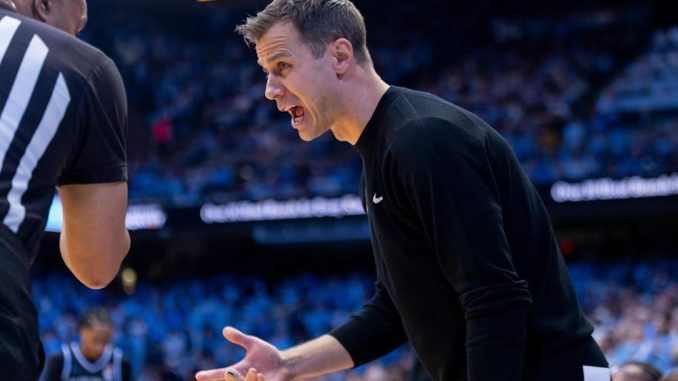
“Did That Really Happen?” — it’s the kind of question that lingers after tense moments in high-level sports, when emotions spill over and even the most disciplined athletes reach their breaking point. For Jon Scheyer, a former Duke Blue Devils legend turned head coach, those moments are not hypothetical—they’re part of the job.
Scheyer, who took over one of college basketball’s most storied programs, has quickly learned that coaching at an elite level goes far beyond drawing up plays. It’s about managing personalities, expectations, and sometimes, outright frustration. In a candid reflection, he revealed one of the toughest aspects of his role: dealing with angry players who feel overlooked, misunderstood, or simply overwhelmed.
“The worst part,” Scheyer admitted, “is when a player looks at you and says, ‘I will quit.’” It’s a statement that can catch any coach off guard—not because of defiance, but because of what it represents. Behind those words is often a mix of pressure, self-doubt, and emotional fatigue. For Scheyer, those moments aren’t about authority; they’re about connection.
As a former player himself, Scheyer understands the intensity of competing at Duke. He’s been in the locker room, felt the weight of expectations, and experienced the highs and lows of performance. That perspective gives him a unique lens when confronting conflict. Rather than reacting with punishment, he leans into dialogue.
“When a player gets to that point, it’s not really about quitting,” he explained. “It’s about something deeper. You have to figure out what’s really going on.” This approach reflects a shift in modern coaching, where emotional intelligence is just as critical as tactical knowledge.
Still, that doesn’t make it easy. Managing a roster full of competitive athletes—many of whom were stars before arriving at college—means navigating egos and ambitions. Playing time, roles, and expectations can quickly become sources of tension. And in a program like Duke, where the spotlight is constant, those pressures are amplified.
Scheyer’s challenge is to maintain standards while also supporting his players as individuals. It’s a delicate balance. Push too hard, and you risk alienation. Ease up too much, and the culture can slip. The “I will quit” moment sits right at that intersection—a test of leadership and empathy.
What stands out most is Scheyer’s refusal to dismiss those encounters. Instead, he treats them as opportunities to build trust. By addressing the root causes—whether it’s frustration over minutes, struggles off the court, or internal doubt—he aims to turn conflict into growth.
In many ways, these moments define a coach more than wins and losses. Anyone can celebrate victory, but it takes resilience and understanding to guide someone through their lowest point. For Scheyer, that’s the real work of coaching.
So when the question arises—“Did that really happen?”—the answer is yes. And it’s happening more often than people realize. Behind every polished game and highlight reel are raw, human interactions that shape both players and coaches alike.


Be the first to comment