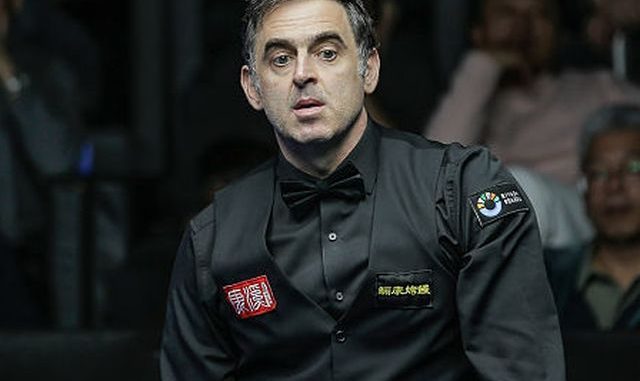
Ronnie O’Sullivan’s risky decision in World Open shows where he’s at before final.
Ronnie O’Sullivan has built a career on instinct, audacity, and an almost defiant refusal to conform—and his latest high-risk decision at the World Open is a revealing snapshot of where he stands heading into yet another major final.
In a key moment late in his semi-final, O’Sullivan faced a choice that most professionals would approach conservatively. The table was delicately poised, with safety play offering a clear path to gradually wrest control. Instead, he went for an ambitious, low-percentage pot that opened the frame dramatically. It was vintage O’Sullivan: bold, unapologetic, and thrilling. Crucially, it came off—but the significance lies beyond the result.
At 48, O’Sullivan is operating in a unique space. He has nothing left to prove in terms of titles or legacy. His place among the all-time greats is secure, and that freedom is beginning to shape how he approaches the game. Where once he might have balanced risk with calculation more rigidly, he now appears increasingly guided by feel. That shot in the semi-final wasn’t just about winning a frame—it was about playing on his own terms.
There’s a sense that O’Sullivan is embracing the closing phase of his career not by tightening up, but by loosening the reins. It’s a dangerous evolution for opponents because it makes him less predictable. Traditional match strategy often relies on forcing errors or waiting for openings, but against someone willing to take the game on at any moment, those patterns can break down quickly.
At the same time, the decision also hints at a calculated confidence. Players lacking form rarely attempt such shots under pressure; they retreat into safety, hoping to minimize mistakes. O’Sullivan’s willingness to attack suggests he trusts both his cueing and his judgment. It’s a sign that, mentally at least, he feels sharp and engaged—key ingredients for success in a final.
Yet, there is an inherent risk in leaning too heavily on instinct. Finals are often decided by fine margins, where discipline and patience can outweigh brilliance. Against a composed opponent, a missed high-risk shot can shift momentum instantly. O’Sullivan knows this better than anyone, which makes his choice all the more intriguing. It wasn’t reckless—it was deliberate, a conscious bet on his own ability to deliver under pressure.
Psychologically, such moments can have a profound impact. When O’Sullivan pulls off audacious shots, it reinforces the aura that has long surrounded him. Opponents aren’t just playing the balls; they’re contending with the possibility that he might produce something extraordinary at any given moment. That uncertainty can be unsettling, especially in a final where composure is everything.
Ultimately, this episode at the World Open underscores a broader truth about O’Sullivan’s current mindset. He is no longer simply chasing victories—he is shaping how he experiences the game. The risky decision reflects a player who values expression as much as outcome, yet remains fiercely competitive.
As he heads into the final, that blend of freedom and confidence could be decisive. If it clicks, it will be mesmerizing. If it doesn’t, it may prove costly. Either way, it perfectly captures where Ronnie O’Sullivan is right now: still daring, still unpredictable, and still capable of redefining the limits of his sport.

Be the first to comment