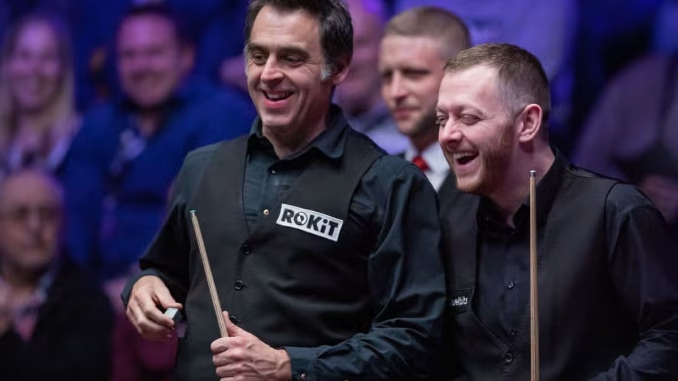
Ronnie O’Sullivan Comments Highlight Issue After Emotional Mark Allen Statement
Ronnie O’Sullivan’s previous calls for greater mental health support in professional snooker have come back into focus following an emotional statement from Mark Allen, who has revealed the extent of his recent struggles.
Allen, 40, opened up about his mental health after returning to competitive action at the Northern Ireland Open in Belfast. His return ended in a 4-2 defeat to close friend Jordan Brown, but the result was overshadowed by an emotional interview in which the Northern Irishman admitted he was struggling and considering his future in the sport.
The three-time World Championship semi-finalist had not competed since losing to Wu Yize in the semi-finals of the World Championship earlier this year. He subsequently missed several tournaments for personal reasons before making his comeback in front of his home crowd.
Following the defeat, Allen admitted that playing against Brown had helped persuade him to return to the table. He also acknowledged that retirement was something he had seriously considered after a difficult period away from competition.
O’Sullivan’s Mental Health Warning Returns to the Spotlight
Allen’s admission has renewed attention on comments made by O’Sullivan, who previously called on snooker’s governing bodies to provide professional mental health support at tournaments.
Speaking during Eurosport’s coverage of the Masters in January 2025, the seven-time world champion argued that players should have access to qualified professionals when they are struggling emotionally.
O’Sullivan suggested that snooker tournaments should provide someone players could approach privately for a conversation, even if they needed only a short break away from the pressure of competition.
He explained that, while players often have coaches to help improve their performances, emotional wellbeing also deserves attention.
The 50-year-old believes that the pressure to perform can affect players regardless of their achievements or financial rewards. According to his argument, the desire to play well, satisfy spectators and meet personal expectations can create significant mental strain.
O’Sullivan also indicated that many players could be experiencing difficulties without openly discussing them.
Allen’s recent experience has therefore brought renewed attention to the question of whether professional snooker needs more accessible, consistent mental health support.
Allen Reveals Ten-Week Stay at Mental Health Clinic
On Wednesday, 21 October, Allen released a statement providing further details about his absence and the emotional interview that followed his defeat.
The former world number one revealed that he had spent ten weeks in a mental health clinic before leaving to compete in Belfast.
Allen explained that his decision to return was influenced by his family, particularly his daughter, as well as the supporters who had followed his career throughout his 21 years on the professional tour.
He also praised World Snooker Tour officials for maintaining contact and supporting him during the difficult period.
Although Allen acknowledged that he was still struggling, he said he had begun to see a more positive future and understood that recovery would take time.
He added that the determination he had demonstrated throughout his snooker career would now need to be directed towards his wellbeing away from the table.
Allen also thanked the therapists, clinic staff, fellow patients, friends and fans who had helped him during his recovery.
Importantly, he confirmed that he intended to continue receiving treatment while considering what the next stage of his career might look like.
Jordan Brown Offers Support After Difficult Match
Brown, who defeated Allen 4-2 in their opening-round encounter, also spoke warmly about his friend after the match.
The victory secured Brown’s progress in the Northern Ireland Open, but he acknowledged that facing Allen under those circumstances had been particularly difficult.
He expressed happiness at seeing his friend return to competition and made it clear that he wanted him to receive the support necessary to recover.
Brown’s comments reflected the personal side of professional sport, where players can be competitors on the table while remaining close friends away from it.
Allen also praised Brown in his statement, asking supporters not to let his personal circumstances overshadow his opponent’s performance.
What Happens Next for Snooker?
Allen’s statement has prompted renewed discussion about the importance of mental health support across professional snooker.
O’Sullivan’s earlier comments suggest that support should be readily available at tournaments rather than left entirely to players to seek out themselves.
The situation also highlights the importance of allowing athletes to speak openly about their difficulties without feeling that doing so undermines their professionalism.
For Allen, the immediate priority is continuing his recovery rather than rushing into a decision about retirement.
Although his future on the professional tour remains uncertain, his latest statement indicates that he is determined to keep working towards a better place in his life.
Meanwhile, O’Sullivan’s previous appeal for dedicated mental health professionals has gained renewed relevance, with Allen’s experience highlighting why emotional wellbeing deserves serious attention throughout the sport



Be the first to comment