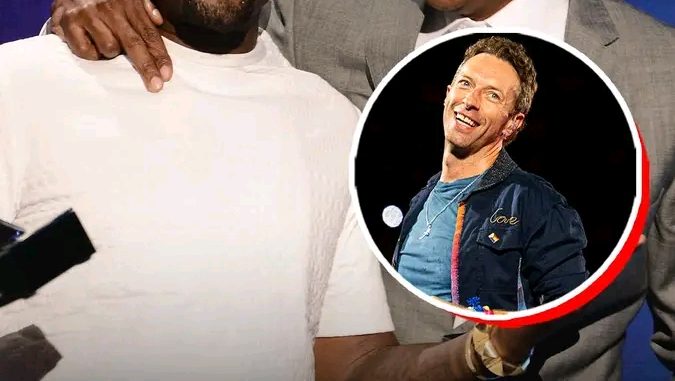
Jay-Z has addressed Kanye West’s long-standing frustration over his collaboration with Coldplay frontman Chris Martin, rejecting the idea that working with the same artist amounted to a betrayal.
The 56-year-old rapper revisited the issue in the seventh episode of his docuseries, JAŸ-Z in 8, during a conversation with legendary music producer Rick Rubin. The discussion brought renewed attention to a disagreement that dates back nearly two decades and highlights the complicated relationship between two of hip-hop’s most influential figures.
Kanye West’s ‘Big Brother’ Complaint
The dispute dates back to 2007, when West released his song Big Brother on his third studio album, Graduation. The track explored his relationship with Jay-Z, whom he regarded as a mentor and an older-brother figure.
In the song, West expressed his frustration after discovering that Jay-Z had also collaborated with Coldplay, following his own work with the British band’s lead singer, Chris Martin.
West rapped about telling Jay-Z that he had recorded a song with Coldplay, only to discover that Jay-Z had also worked with the group.
The lyrics reflected West’s disappointment and his perception that Jay-Z’s decision had crossed a personal boundary.
West also admitted in the song that he had made matters worse by discussing his frustration with Jay Brown, a music executive who later co-founded Roc Nation, instead of addressing Jay-Z directly.
Looking back on the situation, West acknowledged that he should have spoken to Jay-Z personally rather than allowing his concerns to reach him through someone else.
Jay-Z Explains His Side of the Story
During the docuseries, Jay-Z explained that he never considered his collaboration with Martin an act of betrayal.
The rapper emphasised that he and Martin already had a friendship and that he had introduced the Coldplay frontman to West.
“It’s almost as if I betrayed him by having a song [with him],” Jay-Z said, reflecting on how West presented the situation in Big Brother.
He added that listeners could interpret the lyrics as suggesting that he had deliberately wronged West, even though he saw nothing inappropriate about working with a friend.
Jay-Z explained that collaborating with Martin was not something he believed he needed to avoid simply because West had previously recorded with him.
The rapper also acknowledged that he could understand West’s perspective, although he did not agree with the reasoning behind the complaint.
“I can, doesn’t make it right,” Jay-Z said.
He then described part of West’s reaction as entitlement before delivering his central message: “We don’t own people.”
Jay-Z argued that musicians should be free to work with different artists without feeling restricted by another person’s previous collaborations.
He questioned why the order in which artists work together should matter, suggesting that creative partnerships should not be treated as exclusive relationships.
The Timeline Behind the Coldplay Collaborations
Jay-Z and Martin’s musical relationship began before West publicly expressed his frustration.
Martin appeared on Jay-Z’s song Beach Chair, which featured on the rapper’s 2006 album, Kingdom Come.
In 2007, Martin collaborated with West on Homecoming, a track featured on Graduation that became one of the album’s memorable songs.
Jay-Z and Martin subsequently worked together again on Lost+, which appeared on Coldplay’s 2008 release Prospekt’s March.
The timeline is significant because Jay-Z had already worked with Martin before West’s Homecoming was released.
However, West’s lyrics in Big Brother captured how the situation affected his perception of his relationship with Jay-Z.
For West, the issue was not simply about making music with the same artist. It was also connected to the expectations and emotions surrounding a relationship in which he viewed Jay-Z as an influential mentor.
A Complicated Relationship Between Two Rap Icons
Jay-Z and West have shared a long and influential history in hip-hop.
West initially gained major recognition through his production work, including contributions to Jay-Z’s music, before establishing himself as a successful rapper in his own right.
Their relationship subsequently developed into a combination of professional collaboration, mutual admiration and public tension.
Although West’s Big Brother expressed frustration, it also demonstrated the importance Jay-Z held in his life and career.
Over the years, their relationship has experienced further difficulties, with disagreements and public comments contributing to the distance between them.
Jay-Z’s latest remarks offer his perspective on one of the earlier disagreements that became part of their musical history.
Rather than treating the collaboration with Martin as a personal conflict, Jay-Z framed it as a question of artistic freedom and whether one musician should have any claim over another artist’s relationships.
Jay-Z’s Message About Artistic Freedom
Jay-Z’s comments highlight a broader issue within the music industry: whether artists should feel obligated to avoid collaborations because of their friends’ or associates’ previous work with the same musicians.
His position is that working with the same artist does not automatically constitute disloyalty.
By emphasising that musicians do not own one another, Jay-Z defended the freedom to form creative partnerships without unnecessary restrictions.
The discussion also provides insight into how the same event can be interpreted differently by two people. What West viewed as a possible betrayal was, in Jay-Z’s account, a normal musical collaboration involving a friend.
The seventh episode of JAŸ-Z in 8 therefore offers more than a response to an old complaint. It provides another look at the personal dynamics behind a disagreement that became part of hip-hop history.
Nearly 20 years after West addressed the issue in Big Brother, Jay-Z has made his position clear: collaborating with the same artist should not automatically be viewed as an act of betrayal.


Be the first to comment