
La Vuelta Restricts Content Creator’s Rider Access After Pogačar Controversy
La Vuelta a España has changed the working conditions of content creator Erola Jons after controversy surrounding her interactions with riders during the opening stages of the 2026 race, particularly an encounter with Tadej Pogačar that quickly spread across social media.
Jons was brought into La Vuelta’s media operation as part of an effort to attract a younger and broader audience. With more than six million followers across social-media platforms, the Spanish creator was given access to areas normally reserved for riders and accredited media while producing content for the race’s Twitch and YouTube channels.
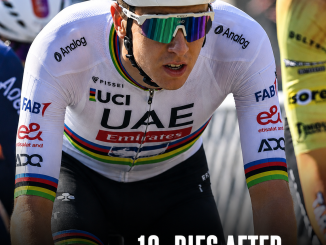
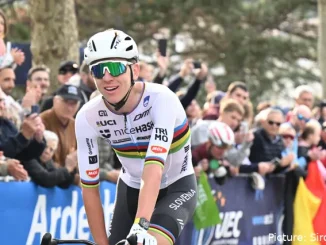
However, her approach during the opening stage in Monaco generated significant criticism. After Pogačar completed the time trial, Jons approached the Slovenian star and made a series of flirtatious comments before asking him why he “hyperventilated” whenever he saw her. Pogačar appeared confused by the question and responded that he breathes all the time. The exchange subsequently went viral and became the centre of a wider debate about the type of content being produced at the race.
The controversy did not involve Pogačar alone. Jons also approached other riders, including Josh Tarling, with comments in keeping with the style of content that has helped build her large following online. Her interactions attracted criticism from sections of the cycling community, with concerns raised about whether that type of entertainment was appropriate in a professional sporting environment.
Pogačar’s team, UAE Team Emirates-XRG, subsequently raised concerns with the race organisation. Rather than removing Jons from La Vuelta, organisers decided to change the conditions under which she could interact with riders.
Under the revised approach, Jons can no longer freely approach riders. She must obtain permission from the relevant team before speaking with or recording a cyclist. Reports also said her access to areas such as the mixed zone, team buses and other locations where direct interaction with riders could occur would be restricted.
La Vuelta has also asked the creator to adapt the tone and style of her content to better fit the sporting environment. Organisers have stressed that Jons was hired as a content creator rather than as a replacement for traditional cycling journalists.
The organisation defended the broader idea behind bringing an influencer into the race, arguing that the goal was to introduce cycling to audiences who might not normally follow the sport. La Vuelta described Jons’ role as entertainment and said her work should be understood within that context.
The decision has therefore stopped short of ending her involvement. Jons is still expected to continue working with La Vuelta, but with clearer boundaries around her contact with riders and teams.
The episode highlights the difficulties major sporting events can face when traditional media coverage is mixed with influencer-driven entertainment. Social-media creators can bring enormous audiences and a different style of storytelling, but professional athletes also operate within tightly controlled environments where access, interviews and filming are normally governed by teams and race organisers.
For La Vuelta, the controversy has become an early test of its strategy to modernise its media coverage. The race wanted to reach a younger generation, but the reaction to Jons’ first interactions showed that there are limits to how far entertainment can be taken around athletes who are competing under intense physical and psychological pressure.
For now, the message from La Vuelta is clear: Jons will remain part of the race’s digital coverage, but her access to riders has been significantly tightened following the backlash over the Pogačar controversy.

Be the first to comment