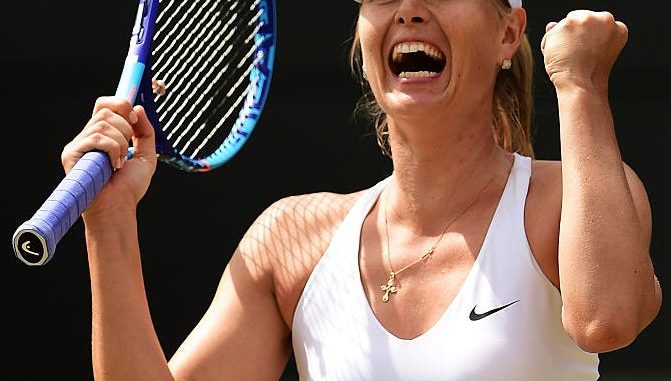
When Maria Sharapova speaks about greatness in women’s tennis, her perspective carries weight. A former world No. 1 and five-time Grand Slam champion, Sharapova competed in one of the most competitive eras in the sport’s history. So when she recently named her personal “Mount Rushmore” of women’s tennis, fans and analysts paid close attention.
Sharapova’s selections reflect not only statistical dominance but also influence, longevity, and the ability to redefine the sport. While she acknowledged that choosing just four players is inherently subjective, her list leaned toward those who changed tennis in lasting ways.
Unsurprisingly, Serena Williams was among the first names she mentioned. Serena’s record of 23 Grand Slam singles titles in the Open Era, combined with her physical dominance and mental resilience, has made her a near-universal choice for any all-time list. Sharapova, who faced Serena numerous times in high-stakes matches, has often spoken about the challenge of competing against her. Beyond titles, Serena’s cultural impact and role in expanding tennis’ global appeal make her inclusion almost inevitable.
Another name on Sharapova’s list is Steffi Graf. Graf’s career is defined by extraordinary consistency and one of the most remarkable achievements in tennis history: the Golden Slam in 1988, when she won all four Grand Slam titles and Olympic gold in the same year. Sharapova has previously praised Graf’s footwork, athleticism, and ability to dominate across all surfaces—qualities that set her apart even among legends.
Sharapova also highlighted Martina Navratilova as a pioneer of modern tennis. Navratilova’s versatility—excelling in both singles and doubles—along with her longevity, makes her one of the sport’s most complete players. With 18 Grand Slam singles titles and a record 31 major doubles titles, her all-court game and fitness revolutionized how tennis is played. Sharapova pointed to Navratilova’s influence on professionalism and preparation as a key reason for her inclusion.
Rounding out the list is Margaret Court, whose record of 24 Grand Slam singles titles remains the highest in history. While debates often arise regarding the eras in which those titles were won, Sharapova emphasized that records still matter. Court’s dominance during her time, both physically and statistically, secured her place among the sport’s elite.
Interestingly, Sharapova acknowledged that leaving out players like Chris Evert and Billie Jean King was not easy. Evert’s consistency and baseline mastery, as well as King’s role in fighting for gender equality in tennis, make them equally deserving in many discussions. Sharapova admitted that any Mount Rushmore is bound to spark debate, especially in a sport with such a rich history of champions.
Sharapova’s choices ultimately reflect a blend of dominance, innovation, and impact. Rather than focusing solely on numbers, she highlighted players who shaped tennis into what it is today. Her perspective also underscores how greatness in sport goes beyond trophies—it includes influence, inspiration, and legacy.
As conversations around tennis history continue, lists like Sharapova’s serve as a reminder of the sport’s evolution. Each generation builds on the last, and while new stars will emerge, the legends she named remain foundational figures in women’s tennis.
Be the first to comment