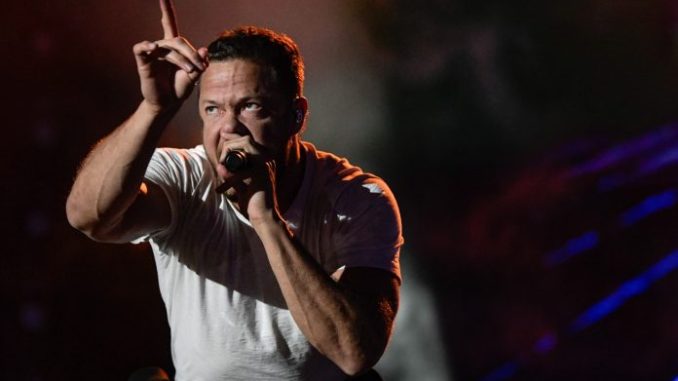
Imagine Dragons frontman Dan Reynolds has revealed that a video game project he had been quietly developing will no longer be making its way to consoles, citing a lack of interest from publishers and partners. The announcement has disappointed fans who were curious to see how the musician’s creative vision would translate into the gaming world.
Reynolds, who has long expressed his passion for video games, shared that the project had been in development for several years. According to him, the game was envisioned as a narrative-driven experience with a strong emotional core—something that would mirror the introspective themes often found in his music. While details remain limited, Reynolds hinted that the game would have blended music and storytelling in a unique way, potentially featuring an original soundtrack crafted alongside gameplay.
Despite the promising concept, the project struggled to gain the momentum needed to secure a console release. Reynolds explained that while early prototypes and pitches were met with polite interest, they ultimately failed to generate the level of excitement required for major investment. In today’s gaming industry—where development costs can be enormous and competition is fierce—publishers tend to prioritize projects with clear commercial appeal or established franchises.
“The idea was always a bit unconventional,” Reynolds admitted in a recent interview. “We weren’t trying to make something that fit neatly into a category. It was more about creating an experience. But that also made it harder to sell.”
Industry analysts note that celebrity-backed games can be a gamble. While star power can attract initial attention, it doesn’t always translate into long-term engagement or sales. Without a proven development studio attached or a recognizable gameplay hook, new intellectual properties often face an uphill battle—especially in the console market, where expectations are particularly high.
Reynolds also acknowledged that timing may have played a role. The gaming landscape has shifted significantly in recent years, with live-service titles, mobile games, and indie hits reshaping player expectations. A slower-paced, emotionally driven game—while potentially impactful—can be a harder pitch in a market dominated by fast-paced, highly monetized experiences.
Still, Reynolds hasn’t ruled out revisiting the concept in another form. He suggested that elements of the project could be adapted into a different medium, such as a smaller-scale indie release, a mobile experience, or even a multimedia project combining music and visual storytelling. “I don’t think the idea is dead,” he said. “It just needs the right home.”
Fans have taken to social media to express both disappointment and support, with many encouraging Reynolds to continue exploring creative ventures outside of music. For an artist known for pushing boundaries and addressing deeply personal themes, the move into gaming felt like a natural extension of his artistic identity.
While the cancellation marks a setback, it also highlights the challenges of breaking into a highly competitive industry—even for globally recognized artists. For now, Reynolds remains focused on his music career, but his interest in interactive storytelling suggests this may not be the last time he experiments with the medium.

Be the first to comment