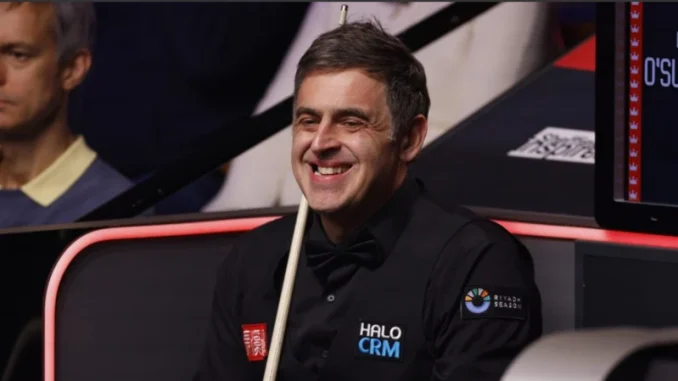
Ronnie O’Sullivan’s ‘rolling the dice’ cue gamble pays off at World Snooker Championship.
Ronnie O’Sullivan has built a career on instinct, brilliance, and a willingness to trust his gut when others might hesitate. At the World Snooker Championship, that fearless approach was on full display once again as his much-discussed “rolling the dice” cue decision paid off in dramatic fashion.
Coming into the tournament, O’Sullivan made headlines not just for his form, but for a bold equipment change. Instead of sticking with a familiar cue setup, he opted to experiment—switching cues and adjusting specifications in a move many insiders viewed as risky so close to snooker’s most prestigious stage. For most players, such a gamble could disrupt rhythm, touch, and confidence. For O’Sullivan, it became another chapter in his long story of calculated unpredictability.
From the opening frames, it was clear that the change had not dulled his edge. If anything, it sharpened it. His cue action looked fluid, his timing precise, and his break-building as devastating as ever. Long pots dropped with authority, positional play remained razor-sharp, and his trademark rapid-fire scoring piled pressure onto opponents who struggled to keep up.
What made the decision particularly striking was the context. The Crucible Theatre is unforgiving, and the World Championship format demands consistency over extended sessions. Small technical inconsistencies can become magnified over the course of a match. Yet O’Sullivan appeared liberated rather than burdened by his choice. The new cue seemed to suit his natural rhythm, allowing him to play instinctively without overthinking mechanics.
Observers noted that the psychological impact may have been just as important as the technical one. By embracing risk, O’Sullivan removed the fear of failure. Instead of playing cautiously to protect his reputation, he leaned into the uncertainty, turning it into an advantage. Opponents, meanwhile, were left guessing—not just about his shot selection, but about how to counter a player who seemed entirely unbound by convention.
As the tournament progressed, the narrative shifted from skepticism to admiration. Commentators began framing the decision as a masterstroke rather than a gamble. Matches that could have been tricky became showcases of control and flair. Century breaks flowed, and his composure in key moments reinforced why he remains one of the sport’s most formidable competitors.
O’Sullivan’s success with the cue change also speaks to a broader truth about elite sport: at the highest level, marginal gains and personal comfort can outweigh tradition. While many players rely on routine and familiarity, O’Sullivan continues to evolve, even deep into his career. His willingness to adapt—whether through technique, mindset, or equipment—keeps him competitive against younger challengers.
In the end, the “rolling the dice” decision was quintessential O’Sullivan: bold, unconventional, and ultimately effective. It served as a reminder that greatness in snooker is not just about precision and practice, but also about courage—the courage to trust your instincts when the stakes are highest.


Be the first to comment