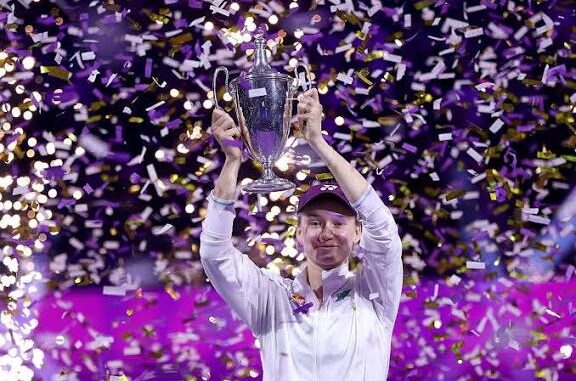
Elena Rybakina’s resurgence has reaffirmed that women’s tennis is thriving at its highest level. The recent WTA Finals produced an unexpected but fitting winner, showcasing the sport’s depth and strength heading into 2026.
Nearly three years after her showdown with Aryna Sabalenka in the Australian Open final once hailed as the dawn of a new “Big Three” alongside Iga Swiatek Rybakina has reestablished herself among the elite. While Sabalenka went on to claim multiple majors and overtake Swiatek for the top ranking, Rybakina’s form wavered after her 2022 Wimbledon triumph. Now, her composed return to dominance, highlighted by a record WTA Finals payday, signals both personal and collective progress for the women’s game.
The competitive landscape has evolved dramatically. Sabalenka remains the world No. 1 but endured several heartbreaking losses this year. Amanda Anisimova rediscovered her confidence after Wimbledon disappointment, while Coco Gauff added a second Grand Slam despite ongoing adjustments to her serve. Swiatek, meanwhile, showed new versatility with a breakthrough Wimbledon title.
For years, women’s tennis lacked enduring rivalries, but that’s no longer the case. With established stars like Sabalenka, Swiatek, Rybakina, and Gauff joined by consistent performers such as Jessica Pegula and rising talents like Mirra Andreeva, the tour has achieved the perfect mix of unpredictability and quality.
Unlike the men’s circuit currently dominated by Carlos Alcaraz and Jannik Sinner women’s tennis offers genuine suspense. Each major begins wide open, ensuring intrigue from start to finish. Rybakina’s composed victory over Sabalenka in Riyadh captured the essence of 2025: high-level competition, compelling narratives, and the promise of an even more thrilling season ahead.



Be the first to comment