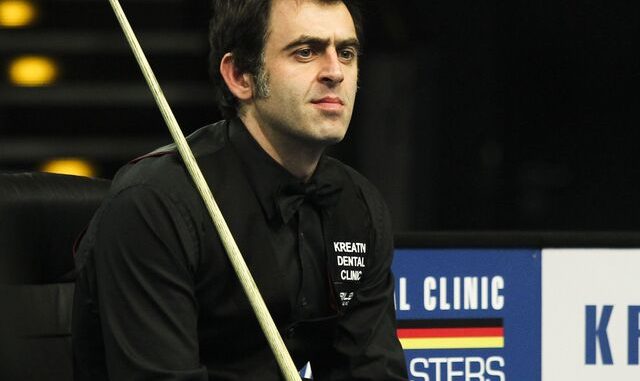
Ronnie O’Sullivan Regrets His Snooker Ambition: Why He Says the Game Is Built on Lies — A Misunderstanding Involving Two Well-Known Players
Ronnie O’Sullivan is widely regarded as one of the most naturally gifted players in the history of snooker. With multiple world titles, record-breaking achievements, and a career spanning more than three decades, his place in the sport is unquestionable. Yet alongside his brilliance has always existed a complex and often uneasy relationship with snooker itself. In recent reflections and interviews over the years, O’Sullivan has repeatedly expressed regret, frustration, and emotional conflict about the ambition that led him into the professional game. To many fans, these comments sound like a contradiction: how can the greatest player of an era feel disillusioned with the very sport that made him famous?
At the heart of O’Sullivan’s remarks is not a rejection of snooker as a craft, but rather a criticism of the culture surrounding it. When he speaks about the game being “built on lies,” he is not accusing individuals of deception in a literal sense. Instead, he appears to be pointing toward what he sees as unspoken pressures, false promises, and a system that rewards sacrifice without adequately addressing the mental and emotional cost to players.
From a young age, O’Sullivan was identified as a prodigy. His talent brought expectations, structure, and relentless focus long before he had the maturity to decide whether that life truly suited him. Like many elite athletes, he grew up in an environment where success was framed as the only acceptable outcome. According to O’Sullivan’s own reflections, the narrative sold to young players is simple: commit everything, endure the grind, and fulfillment will follow. Reality, he suggests, is far more complicated.
Throughout his career, O’Sullivan has been unusually open about his struggles with mental health, motivation, and identity. Unlike many athletes who present a polished public image, he has often spoken candidly about feeling trapped by snooker, even while dominating it. This tension has led him to question whether his ambition was truly his own, or whether it was shaped by expectations imposed on him at a young age.
His comments have sometimes been interpreted as dismissive toward other players, but such interpretations often miss the nuance. O’Sullivan has consistently emphasized that his frustration is directed at the system rather than individuals. The “lies,” as he frames them, relate to the idea that success automatically brings happiness, balance, or inner peace. For him, winning titles did not silence self-doubt, nor did it resolve the psychological toll of life on the professional circuit.
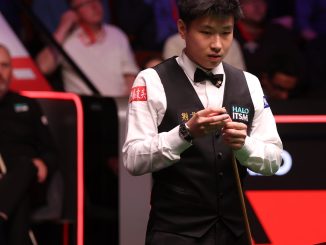
A recent misunderstanding involving two well-known players illustrates how easily O’Sullivan’s words can be taken out of context. In discussions about modern snooker and player mentality, remarks intended as personal reflections were perceived by some as criticism of fellow professionals. This led to speculation of conflict, when in reality the disagreement stemmed largely from interpretation rather than intent. O’Sullivan’s tendency to speak openly, without softening his language, often creates friction in a sport that traditionally values restraint and diplomacy.
This pattern is not new. Throughout his career, O’Sullivan has occupied a unique position: both insider and outsider. He has benefited immensely from snooker, yet has never fully embraced its conventions. He questions training routines, competitive structures, and the emotional expectations placed on players. To supporters, this honesty is refreshing. To critics, it can sound ungrateful or dismissive.
What makes O’Sullivan’s perspective particularly compelling is that it comes from a position of achievement, not failure. His regrets are not rooted in unmet potential but in a deeper examination of what success costs. By openly questioning his ambition, he challenges a fundamental assumption in professional sport: that total devotion is always worthwhile.
For younger players and fans, this message can be uncomfortable. Sport often relies on clear heroes and straightforward narratives. O’Sullivan disrupts that simplicity. He presents a version of excellence that includes doubt, exhaustion, and second thoughts. In doing so, he invites a broader conversation about mental health, personal agency, and the pressures embedded in elite competition.
The misunderstanding involving the two familiar players ultimately reflects this broader tension. In a sport where words are carefully chosen and reputations are closely guarded, O’Sullivan’s bluntness stands out. Yet those who listen closely often find that his criticism is inward-facing. He is questioning his own choices as much as the environment that shaped them.
As O’Sullivan’s career continues into its later stages, his reflections may become an important part of his legacy. Beyond the records and trophies, he offers a rare glimpse into the emotional reality of elite performance. His regret is not a rejection of snooker, but a warning against romanticizing ambition without acknowledging its cost.
In the end, Ronnie O’Sullivan’s story is not about bitterness or blame. It is about complexity. It is about a man who achieved everything his sport promised, yet still felt compelled to ask whether the promise itself was honest. That question, uncomfortable as it may be, is one that resonates far beyond the snooker table.


Be the first to comment