From Mikaela Shiffrin to the Next Generation: Regan Dewhirst Brings a High-Performance Lens to GMVS
For years, Regan Dewhirst worked in an environment where virtually every detail mattered. Supporting Mikaela Shiffrin meant looking well beyond what happened during a training session or inside the gym. Recovery, communication, the quality and purpose of time on snow and the factors beyond skiing could all influence performance.
Now, Dewhirst is bringing those lessons into a very different environment.
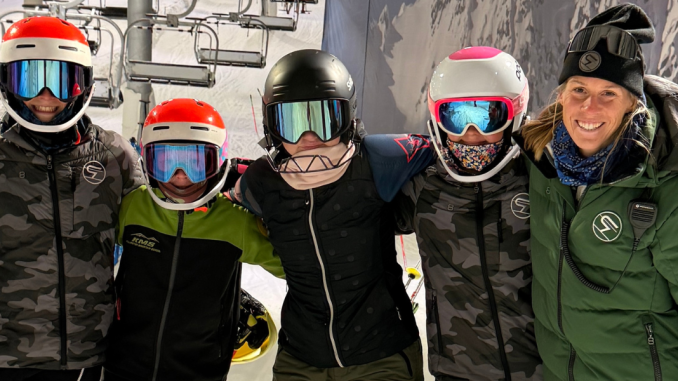
After working alongside Shiffrin through the most recent Olympic cycle, Dewhirst has joined Green Mountain Valley School (GMVS), where her role bridges physical therapy, strength and conditioning, return to snow and coaching. The athletes are younger and the demands are different, but Dewhirst believes many of the principles she learned at the highest level of the sport still apply.
“I look at each one of these athletes individually in the exact same way as I looked at her,” Dewhirst said. “Each athlete needs a certain amount of focused individual time to understand what makes them tick.”
It is an approach that takes some of what Dewhirst learned working with one of the best ski racers in history and applies it much earlier in an athlete’s development. High performance, in her view, isn’t only about finding ways to make athletes faster. It is also about helping them understand their bodies, communicate what they need and learn why they are doing the work in the first place.
A Career That Kept Coming Together
Dewhirst’s path into elite ski racing wasn’t necessarily something she planned from the beginning. She played Division I soccer at the University of Vermont before pursuing physical therapy, completing a residency, and working at a sports clinic in Burlington.
While in PT school, she also spent weekends coaching at GMVS Junior Race Program and Quechee Ski Club.
Dewhirst and Shiffrin had grown up skiing together and shared a family connection, so when Shiffrin reached out after the 2018 Olympics looking for someone who understood both physical therapy and skiing, the opportunity made sense.
Dewhirst took it, beginning a professional relationship that would eventually take her throughout the World Cup circuit and through an Olympic cycle.
Looking back, she sees her career less as a perfectly planned progression and more as a collection of experiences that continued to become useful in unexpected ways. Even now, while working with younger athletes, she finds herself pulling from experiences that had little to do with World Cup skiing, including coaching youth soccer and working as a camp counselor.
“I believe that there are aspects of your life that as long as you follow what lights you up, it all comes together,” she said.
That philosophy eventually played a role in her decision to take another leap.
A New Challenge at the Right Time
Walking away from Shiffrin’s team was not an easy decision. Dewhirst had committed herself fully through the Olympic cycle, but she had also reached a point where she wanted another professional challenge and an opportunity to spend more time at home.
Importantly, she wasn’t leaving because the relationship or the work had stopped being rewarding. In many ways, the timing felt right because things were going well.
“We did everything we wanted to do,” Dewhirst said. “It was starting to feel like, it was time to just challenge myself in a new way and take another step in my career where I could use my brain in a different capacity.’”
Shiffrin was supportive of the decision, and the opportunity at GMVS allowed Dewhirst to return to something she has enjoyed for much of her life: working with young athletes.
“I’ve always enjoyed working with kids,” she said. “The school environment, where student-athletes are playing soccer, performing in the play, and growing into young adults is really special. To have a small role in helping them become better versions of themselves is exciting.”
Regan Dewhirst working with Mikaela Shiffrin. Provided by Regan Dewhirst.
What World Cup Performance Can Teach Young Athletes
One of Dewhirst’s biggest takeaways from working with Shiffrin was understanding how many factors contribute to performance. At the World Cup level, that meant regular communication with coaches and technicians while considering recovery, tissue health, travel, media obligations and everything else happening around the athlete.
The experience taught her to look at the whole athlete rather than separating performance into individual pieces, and she believes the same approach matters with teenagers. “It’s really no different for a high school athlete,” she said. “I think it’s easy to look at an athlete and think, they’re kids, they’re resilient, they can handle anything. But they have school, stressors outside of school and their own pressures they’re navigating.”
The difference is that a young athlete may not yet have the experience or language to recognize those factors and communicate them and what they need. Part of Dewhirst’s role is helping athletes develop that awareness while also giving coaches and performance staff a clearer picture of when an athlete is ready to be challenged and when backing off might actually produce a better long-term result.
Regan Dewhirst with Mikaela Shiffrin after winning the Overall Globe. Provided by Regan Dewhirst.
Regan Dewhirst and Mikaela Shiffrin warm up before training. Provided by Regan Dewhirst
Making Training Intentional
As Shiffrin progressed through her career, Dewhirst said one concept became increasingly important: finding the “minimum effective dose.”
The idea is not about doing less for the sake of doing less. It is about knowing exactly what a session is supposed to accomplish and recognizing when that goal has been met. “What are we here to do and did we do it?” Dewhirst said. “If we’re out and the snow isn’t good, is this worth it? What are we actually getting out of it and does that meet the broader goal?”
For a high school athlete, that question can be equally important. Ski racers are balancing school, travel, training, racing, strength work and the normal physical changes that come with growing. More training is not automatically better training.
Dewhirst is using her first year at GMVS to better understand those demands. She wants to see where athletes become fatigued, how their yearly training plans fit with the school schedule and how strength and conditioning can be better individualized for different ages.
“We want days where we promote grit and strength and build capacity,” she said. “But we also have days where we have to consider external stressors and we cannot keep pushing.”
The goal is not to remove hard training. It is to make sure the hard training has a reason behind it.
Regan Dewhirst working with a GMVS athlete in their gym. Provided by GMVS.
Getting Ahead of Injuries
Dewhirst’s role at GMVS also gives her the opportunity to see athletes in multiple environments. She can watch them ski, see how they move during dryland training and then evaluate them through a clinical lens.
That combination can reveal things that might otherwise be missed.
Dewhirst described watching a young athlete move on snow and recognizing what appeared to be a strength and motor-control compensation associated with growth. Rather than waiting for that weakness to potentially become an injury, the athlete can be brought into the gym, assessed and given individualized work.
“It’s a much more proactive approach,” Dewhirst said. “I think it’s helping athletes move better and think more intentionally earlier in their career.”
GMVS already had an established support system when Dewhirst arrived, including athletic trainer Chris Palmer, nutrition services, a high-performance staff, and Elevation Physical Therapy. Dewhirst sees her position as another connection between those areas and someone who can help athletes understand how the pieces fit together.
“I think of myself as hopefully somebody that can help them see all the different facets that play into their performance
Regan Dewhirst works with a GMVS athlete in the academy’s gym. Photo courtesy of GMVS.
Return to Sport Is More Than a Timeline
Another area Dewhirst hopes to influence is how young athletes understand injury rehabilitation.
Professional sports can create unrealistic expectations around return-to-sport timelines. Athletes and parents hear about someone returning from a major injury in six, eight or nine months, but those timelines rarely tell the entire story.
Dewhirst prefers a criteria-based approach where athletes progress by meeting specific benchmarks rather than simply reaching a date on the calendar.
“We’re going to focus on strength for the next four weeks,” she offered as an example. “If they hit these specific strength numbers, then we move on to the next phase versus just getting lost in the expectation of nine months.”
There is also a significant difference between being medically cleared and being ready to perform in ski racing. An athlete can pass a strength test in a controlled environment, but skiing introduces variables that are difficult to recreate in a clinic or gym.
The snow changes. Weather changes. Terrain changes. An athlete may return to a hill where an injury happened or encounter conditions they have not experienced since getting hurt. Dewhirst believes those exposures are part of the rehabilitation process, particularly when it comes to rebuilding confidence.
“The athlete needs to be exposed to those variables before they’re ready to be at 100%,” she said.
Even returning to competition does not mean the process is finished. Sometimes the first race back is simply another step: putting on a bib, pushing out of the start and experiencing competition again.
Dewhirst believes there can be too much pressure for athletes to immediately perform at their previous level once they are labeled as “back.”
“We need to set the expectations for that phase a little bit more,” she said.
Communication at the Center
Communication connects nearly every part of Dewhirst’s approach. It was essential while working with Shiffrin, it matters throughout rehabilitation and it becomes particularly important with young athletes who are still learning how to describe what they feel. One of Dewhirst’s first goals is simply developing a common language with each athlete. A teenager may not immediately know how to describe fatigue, discomfort or why something feels different, and learning to recognize and communicate those things is part of becoming a more independent athlete.
Communication also has to extend across the adults surrounding the athlete. Coaches, medical professionals and performance staff will not always see a situation the same way, and Dewhirst believes that can actually be valuable if the environment allows for productive disagreement.
“You need to be able to have those hard conversations to truly get to what’s best for the athlete because everybody is advocating from their lens,” Dewhirst said.
Communication has been central to Regan Dewhirst’s work with Mikaela Shiffrin.
Dewhirst is still early in her time at GMVS, and part of this first year is simply learning what the role can become. She is observing schedules, seeing where athletes get tired, understanding what already works and identifying areas where she can help.
Ask her what success might look like several years from now, however, and the answer goes beyond race results.
Fewer injuries would be one measurable outcome. Athletes understanding how to build strength, manage their bodies and maximize their own performance would be another. But Dewhirst is equally interested in something that is harder to measure: whether athletes leave GMVS with the confidence to understand and advocate for what they need.
“Id love to see athletes develop a confident voice, understand their needs, and advocate for themselves. I think that’s a win,” she said.
Ultimately, she said, it is about “creating all-around good humans.”
Dewhirst spent years helping one of the world’s best ski racers understand how to manage her body and performance across the demands of a World Cup season. At GMVS, she now has the opportunity to introduce some of those same lessons much earlier.
For developing ski racers, that may be just as valuable as any workout or training session: learning what their bodies need, understanding the purpose behind the work they are doing and developing the confidence to be an active part of their own performance
Born in Breckenridge, Colorado, Katie grew up ski racing with Team Summit before going on to become an NCAA Champion with the University of Colorado. She is also a U.S. Overall Champion and a World University Games Champion, bringing a decorated athletic career to her work in the sport. After retiring from racing, Katie transitioned into coaching, taking on high-performance roles with the Ontario Ski Team and the U.S. World Cup Women’s Team. Now based in Collingwood, Ontario with her husband, two young kids, and their dog, she brings a deep understanding of the athlete journey to Ski Racing Media. Katie is passionate about family, mountain biking, kiteboarding, strong coffee, and empowering the next generation of athletes, coaches, and parents.



Be the first to comment