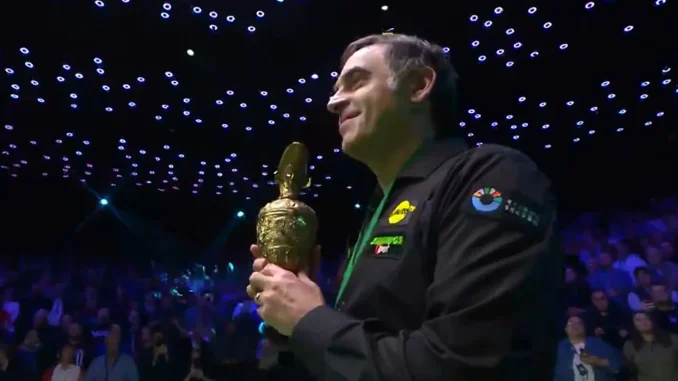
Debate Ignites After Ronnie O’Sullivan Claims First World Seniors Title
The snooker world is abuzz following Ronnie O’Sullivan’s victory at the World Seniors Snooker Championship, a milestone that has reignited a long-standing debate: should active players on the World Snooker Tour be eligible to compete in seniors events?
O’Sullivan, widely regarded as one of the greatest players in the sport’s history, added the seniors crown to his illustrious list of achievements, sparking both admiration and controversy. While his triumph has been celebrated as another chapter in a legendary career, critics argue it raises questions about fairness and the original intent of seniors competitions.
Traditionally, the World Seniors Championship has been viewed as a stage for former professionals and veteran players who have stepped away from the demands of the main tour. It offers a chance for older players to remain competitive and visible in the sport. However, the current rules allow any player aged 40 and above to participate, regardless of whether they are still active on the professional circuit.
Supporters of the existing format argue that age should be the only criterion. From this perspective, O’Sullivan’s participation is entirely legitimate. At over 40, he meets the requirements and has every right to compete. Advocates also point out that his involvement boosts the profile of the event, attracting larger audiences, increased sponsorship, and greater media attention. In a sport that continues to expand globally, star power can play a crucial role in maintaining relevance and commercial success.
On the other hand, opponents believe that allowing active top-tier players creates an uneven playing field. Competitors who no longer play regularly on the WST Tour may struggle to match the sharpness and consistency of someone like O’Sullivan, who continues to compete at the highest level. Critics argue that this undermines the spirit of the seniors event, turning what was intended as a more level competition into one dominated by still-active elite professionals.
Some voices within the snooker community have suggested a compromise. One proposal is to create separate categories within the seniors tournament—one for active professionals and another for retired or non-tour players. This approach could preserve inclusivity while maintaining competitive balance. Others have called for stricter eligibility rules, limiting participation to players who are no longer part of the main tour.
The governing bodies have yet to indicate any immediate changes, but the discussion is unlikely to fade. O’Sullivan’s victory has brought renewed attention to the issue, and with more players extending their careers well into their 40s and beyond, the question of eligibility is becoming increasingly relevant.
Ultimately, the debate reflects a broader tension between tradition and evolution in modern sport. Should seniors events remain a haven for retired players, or adapt to the reality of longer professional careers? For now, O’Sullivan’s win stands as both a remarkable achievement and a catalyst for conversation—one that could shape the future of seniors snooker for years to come.
Be the first to comment