Often dubbed the “Hell of the North,” Paris-Roubaix stands as one of cycling’s most iconic and distinctive one-day races. The 2026 edition, scheduled for April 12, marks the final cobbled Monument of the UCI World Tour season, bringing the sport’s top classics specialists to the rugged roads of northern France. Teams prepare meticulously for the race’s brutal sectors, positioning support crews with spare wheels at key نقاط. Mechanical failures and punctures are frequent, making luck a decisive factor that can instantly reshape the outcome.
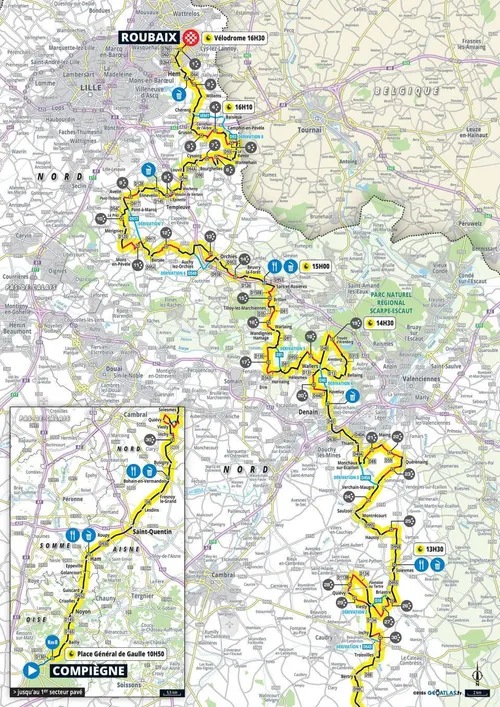
The route features several decisive cobbled stretches. Hornaing to Wandignies (3.7 km) appears with 79 km remaining, followed by Tilloy to Sars-et-Rosières (2.4 km) at 70 km to go. The Auchy to Bersée sector (2.7 km) comes at 52 km, leading into the critical Mons-en-Pévèle, a 3 km five-star հատված tackled with 46 km left often a launchpad for major attacks.
Profile: Compiegne – Roubaix
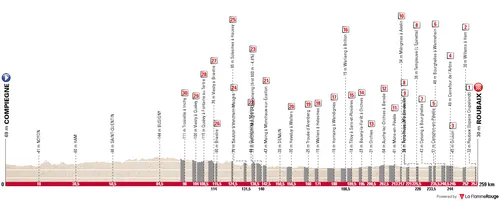
Later in the race, the combination of Camphin-en-Pévèle (1.8 km, four-star) and Carrefour de l’Arbre (2.1 km, five-star), at 18.5 km and 14 km to go respectively, is where decisive gaps frequently form. Though not the final sectors, their placement after hours of attrition makes them ideal for race-winning moves, especially given Carrefour de l’Arbre’s technical difficulty and repeated accelerations.
A newer հատված, Willems to Hem (1.4 km, three-star) at 7 km remaining, rarely proves निर्णative but could still influence outcomes in a reduced group. From there, the race heads into Roubaix on flat roads, often setting up tactical attacks before the iconic velodrome finish, where a battered but deserving winner emerges.
The Favourites
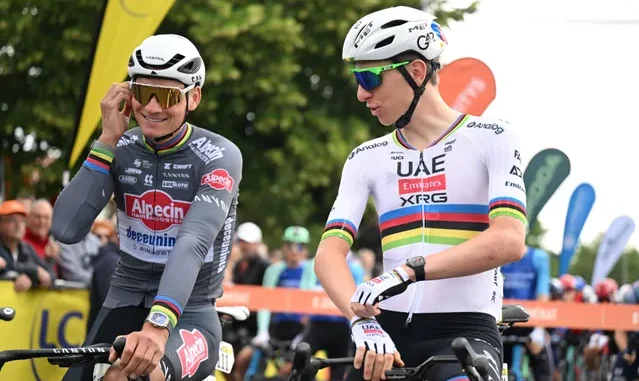
Tadej Pogačar enters as the leading contender, though not overwhelmingly so, perhaps a 60/40 edge over Mathieu van der Poel. While Roubaix’s terrain doesn’t perfectly suit him, his endurance-based strategy refined with support from Florian Vermeersch focuses on making the race hard from distance. By increasing fatigue across the field, Pogačar aims to exploit the final stages, where raw power matters less than resilience. A more aggressive, early-race approach also reduces unpredictability and minimizes the chaos of large խմբ groups.
Van der Poel, meanwhile, remains an exceptional threat. A three-time defending champion, he combines elite positioning, sustained power, and sprint capability. His team strength featuring riders like Jasper Philipsen adds further tactical depth. A fourth consecutive win would be historic, though he may need to be more tactically disciplined than in previous clashes with Pogačar.
Wout van Aert finds himself in a difficult tactical position. Strong enough to contend but not clearly superior, he may again be forced to chase rather than dictate. For victory, he likely needs optimal form, strategic execution, and favorable race circumstances.
Beyond the top tier, the depth of contenders is remarkable. Riders such as Filippo Ganna, Matej Mohorič, Jasper Stuyven, and Alec Segaert bring serious firepower, while others like Stefan Bissegger and Oliver Naesen have shown strong recent form. The unpredictability of Roubaix means outsiders including Søren Wærenskjold and Michael Valgren could still break into the top results.
Prediction – Paris-Roubaix 2026
Pogačar, Van der Poel
Vermeersch, Van Aert, Mads Pedersen, Ganna
Christophe Laporte, Philipsen, Jonas Abrahamsen, Mohorič, Segaert, Stuyven, Daan Hoole, Gianni Vermeersch, Tim van Dijke


Be the first to comment