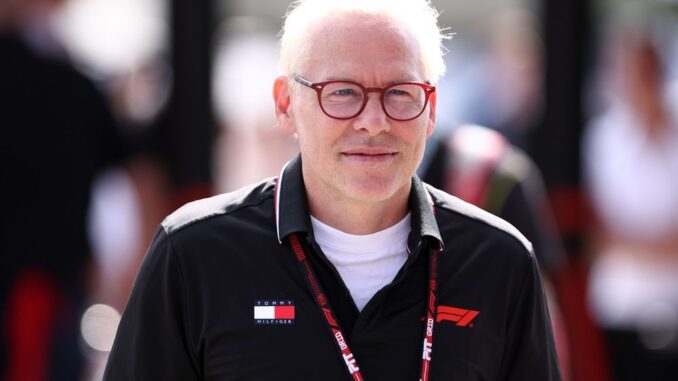
Jacques Villeneuve: Lando Norris’s title fight brought back Michael Schumacher battle memories
Jacques Villeneuve’s recent reflections on Lando Norris’s title fight have struck a chord with Formula 1 fans, because they tap into something deeper than raw statistics or race results. By invoking memories of Michael Schumacher’s great championship battles, Villeneuve wasn’t simply praising Norris’s speed; he was highlighting a familiar mentality, one that defines true title contenders and separates them from drivers who are merely quick.
For Villeneuve, a world champion who raced wheel-to-wheel with Schumacher in the 1990s, the comparison is rooted in pressure. Schumacher’s defining strength was his ability to thrive when everything was on the line. Championships were not just won on Sundays, but in the accumulation of relentless focus: extracting maximum performance in poor conditions, capitalising instantly on rivals’ mistakes, and turning small advantages into decisive ones. Villeneuve sees echoes of that mindset in Norris’s recent title fight, particularly in how the McLaren driver has approached races where expectations suddenly shifted from podium hopes to championship responsibility.
Norris’s evolution has been gradual but unmistakable. Long regarded as one of the most naturally gifted drivers of his generation, he initially built his reputation on consistency and intelligence rather than ruthlessness. However, as McLaren’s competitiveness improved and the title fight became real, Norris’s approach sharpened. Villeneuve’s Schumacher comparison points to this transition: the moment when a driver stops racing as an outsider and starts thinking like a champion. That means defending harder, attacking with more conviction, and making peace with the idea that every decision could define a season.
What makes the Schumacher parallel especially compelling is the context. Schumacher often carried teams on his shoulders, bending race weekends to his will even when the machinery was not clearly dominant. Norris, too, has found himself in situations where execution mattered more than outright pace. Villeneuve’s memories are likely triggered by Norris’s composure in tense moments—safety car restarts, strategic gambles, and high-pressure qualifying laps—where the young Briton has shown a willingness to take responsibility rather than defer to circumstances.
There is also a psychological layer. Schumacher was famous for unsettling rivals simply by being ever-present, always close enough to strike. Villeneuve’s comments suggest Norris is beginning to project that same aura. Rivals now expect him to be in the mix, to apply pressure, and to force errors. That shift in perception is crucial in a title fight, because championships are often decided as much in the mind as on the stopwatch.
Still, Villeneuve’s comparison is not a declaration that Norris has reached Schumacher’s legendary status. Instead, it frames Norris’s title fight as a formative experience. Schumacher’s early battles, including his clashes with Villeneuve himself, were the crucible that forged his dominance. In the same way, Norris’s current fight may be remembered as the moment he learned what it truly takes to contend for a world championship.
Ultimately, Villeneuve’s reflections are less about nostalgia and more about recognition. He sees in Norris the familiar signs of a driver stepping into a new identity—one shaped by pressure, ambition, and belief. If Schumacher’s battles defined an era, Norris’s could be laying the foundations for his own.
Be the first to comment