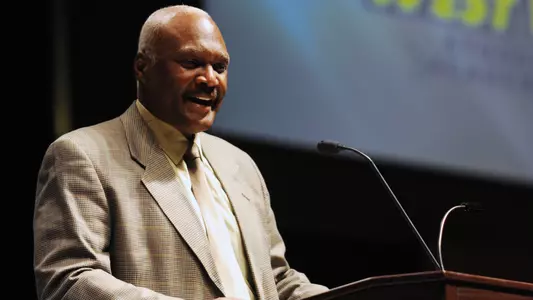
MORGANTOWN, W.Va. — Garrett Ford Sr., a trailblazing figure in West Virginia University athletics, has died. He passed away Sunday night in Charlotte, North Carolina, his son Garrett Jr. confirmed.
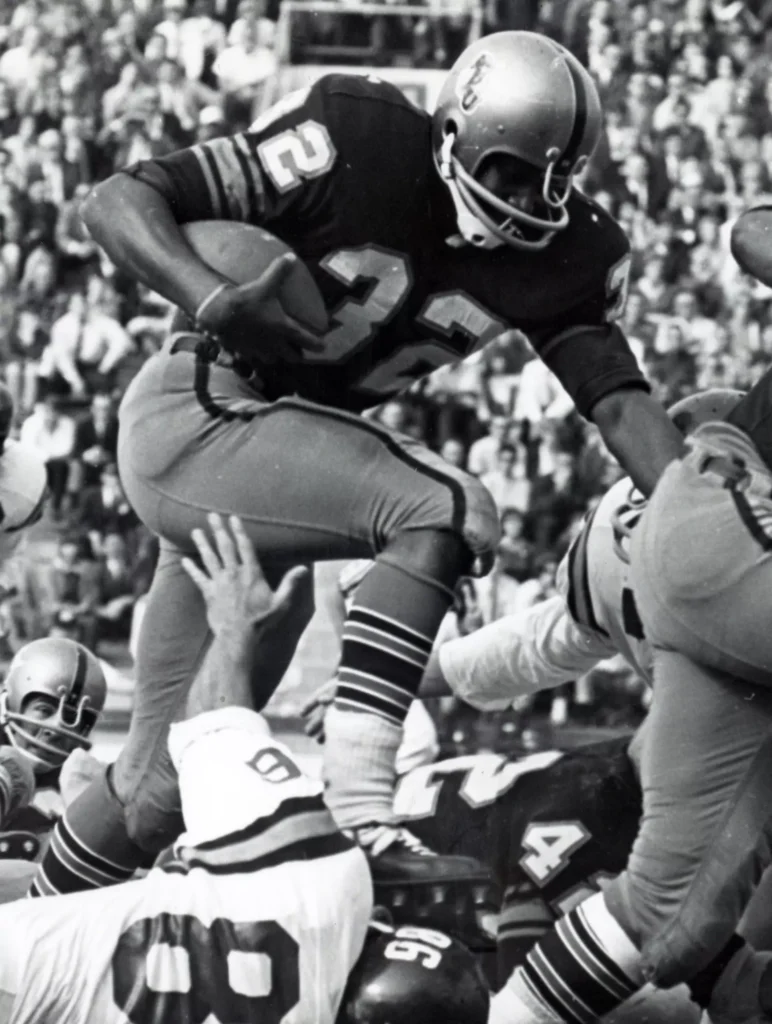
Ford made history as WVU football’s first 1,000-yard rusher during the 1966 season and is regarded as one of the program’s greatest running backs. He was also among the early group of Black athletes who helped integrate Mountaineer football in the mid-1960s. Dick Leftridge and Roger Alford were the first Black players to appear in games for WVU in 1963, one year before Ford arrived on campus.
A standout prospect from DeMatha High School in the Washington, D.C., area, Ford was recruited while playing for legendary coach Morgan Wootten, who also led the school’s football program. Ford later reflected on how DeMatha marked his first meaningful interaction with white classmates and how those experiences shaped his outlook.
When Ford enrolled at WVU in 1964, there were fewer than 20 Black students on campus. Aware of the racial climate of the time, he was initially hesitant about attending. His recruiting visit to Morgantown, guided by Leftridge and Alford, left a lasting impression as he was introduced to the local Black community and the shared struggles of people across racial lines.
What ultimately sold him on WVU, Ford said, was the sense of unity he felt among residents. In his words, poverty and hardship were common experiences that transcended race, creating a strong sense of brotherhood.
On the field, Ford led WVU in rushing with 854 yards in 1965 and delivered one of the most memorable performances in school history against Pitt, totaling 341 all-purpose yards — a record that stood for 41 years. In 1966, under coach Jim Carlen, he rushed for 1,069 yards and seven touchdowns, earning second-team All-America honors.
An ankle injury limited his senior season in 1967 and shortened his professional career to one year with the Denver Broncos in 1968. Soon after, Bobby Bowden invited Ford to become WVU’s first Black assistant football coach. What was meant to be a short stay in Morgantown turned into a 44-year career.
Ford later played a key role in recruiting, notably landing Robert Alexander, the nation’s top high school prospect in 1977. He then transitioned into academic support, helping build programs that emphasized degree completion and personal development. Over the years, he mentored generations of Mountaineer stars, from Darryl Talley and Major Harris to Pat White, Steve Slaton, Geno Smith and Tavon Austin.
Former colleagues credited Ford with having an unparalleled impact on the academic, athletic and social success of African American students at WVU. He earned his bachelor’s degree in physical education in 1969 and a master’s in guidance and counseling in 1973, later rising to assistant athletic director in 1985 and associate athletic director in 2002.
Ford’s legacy extended through his family. His son Garrett Jr. starred for WVU in the late 1980s, his daughter Tracie competed in track, and his grandson Bryce finished his career in 2022 as one of the program’s most productive receivers marking three generations of Fords at WVU.
Ford and his wife, Thelma, recently moved to the Charlotte area to be closer to family. According to his son, Ford died peacefully while wearing a West Virginia shirt a fitting symbol of his lifelong connection to the school.
Ford was 80 years old. Funeral arrangements are pending, with the family considering a memorial service in Morgantown later this spring. He was inducted into the WVU Sports Hall of Fame in 1995 and the School of Physical Education Hall of Fame in 2004.
Be the first to comment