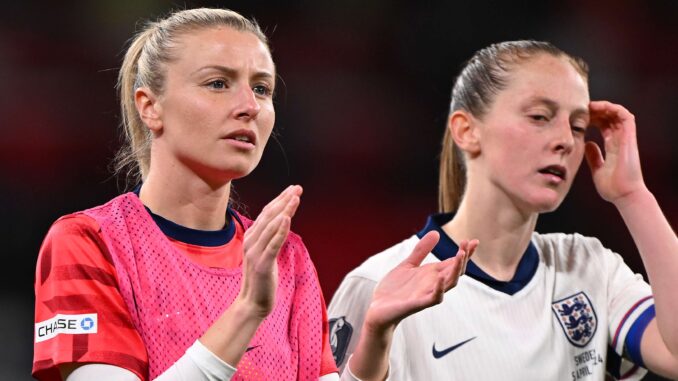
Keira Walsh reveals how her leadership style differs from Leah Williamson as Chelsea midfielder prepares to captain Lionesses at sold-out Wembley Stadium.
With Williamson — the usual captain — unavailable through injury, and a number of other senior defenders also out or retired, England’s coach has handed the armband to Walsh for the upcoming match against China Women.
It’s a significant moment: Walsh will lead her country at Wembley, at one of the most iconic venues in world football.
Walsh’s leadership — quiet, consistent, by example
Walsh acknowledges openly that she leads differently than Williamson:
“I’m probably a little bit quieter than Leah, especially off the pitch.” Rather than being outspoken or rallying vocally, she tends to lead by performance and example.
She emphasises consistency — in training drills and in the way she plays — as her form of leadership, hoping that younger or newer players will pick up guidance from watching her.
Walsh also prefers more one-to-one conversations, especially with younger teammates, rather than big-group speeches.
As she put it: it’s “special” to captain her country — but she knows she can’t “step into Leah’s shoes” in exactly the same way.
Williamson’s style — vocal, emotionally charged, authoritative
By contrast, Williamson has been described over the years as a more traditional leader:
She’s often praised for being “a natural of unnatural leaders,” someone comfortable with rallying the team, delivering motivational speeches, and psychologically galvanising teammates before and during matches.
On the pitch, she leads from the back with authority — defending, positioning, organizing, and influencing the team’s shape. Off the pitch, she often becomes a spokesperson, a motivator, someone who unites the group and offers emotional support.
Her leadership comes with an “emotional intelligence” — able to balance being commanding in the heat of a match and empathetic, calm, and considerate during quieter moments.
What this means for England — and for the team dynamic
With Walsh at the helm, England might rely more on calmness, structure, and consistency, rather than emotional rallies or loud motivation. This could suit a match where composure and tactical discipline matter more than emotional intensity.
Walsh’s quieter, lead-by-example style might particularly resonate with younger or newer squad members — giving them a model to emulate in behaviour, work ethic and attitude.
At the same time, a shift in leadership style may mean different dynamics: instead of one voice rallying the squad, leadership could become more distributed — with more reliance on cohesion, shared discipline, and individual responsibility.
Walsh herself seems aware of the weight of responsibility, acknowledging that this moment is “really special… more so for my family as well.”
What to expect at Wembley — and beyond
The upcoming match (England vs China) at a sold-out Wembley will be an early test of this new leadership dynamic — a test not only of Walsh’s playing and tactical leadership, but of her ability to steer the team without the vocal presence many fans associate with Williamson.
It’s also a snapshot of what the future leadership of the Lionesses might look like: a calmer, steadier, more lead-by-example captaincy that may define a transitional phase — especially as younger players are blooded and squad rotation becomes more frequent.
Whether this quieter approach yields the same sense of unity, drive and purpose that Williamson has delivered is something only time — and results on the pitch — will tell.



Be the first to comment