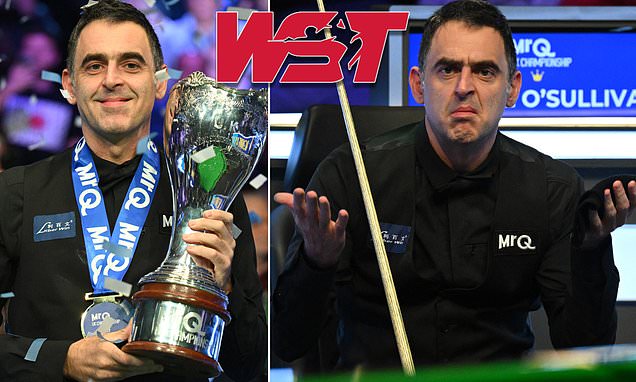
From doubt to dominance — why he’s now widely viewed as snooker’s GOAT: Ronnie O’Sullivan reveals why he almost abandoned his snooker dream as a teenager before going on to become the sport’s GOAT.
Early pressures — a family torn between sport and stability
From a young age, O’Sullivan was haunted by conflicting voices. His father pushed hard for him to drop school and devote himself fully to snooker: “We’re going to try and get him to become a pro snooker player.” But his mother had other ideas — she believed he should concentrate on getting a proper education.
That tug-of-war placed a heavy burden on a teenager. For O’Sullivan’s mother, snooker — especially as a professional pursuit — looked like a gamble on a potentially unstable future. In his own words: his mum “didn’t even want me to play professional snooker or amateur snooker.”
This family divide kindled deep self-doubt in him. Even after his first big success — becoming the youngest ranking-event winner at just 17 — O’Sullivan admitted he still felt like an imposter. He thought: maybe it was just luck. “I still had a lot of doubt … I thought I’d won that because Stephen played badly.”
All that uncertainty made him question whether a future in snooker was worth the emotional cost.
The mental toll — “I talked about letting go of it”
In a more recent reflection, O’Sullivan acknowledged how often he had considered giving it all up. He said:
> “I talked about letting go of it but I just couldn’t do it … I knew if I stopped the snooker, a lot of my demons would be gone.”
At stake wasn’t just a career; it was family. He explained that, with his father still alive (but ageing), he felt pressure — almost duty — to persist:
> “My dad said ‘every time I see you on the telly, it’s like a visit’. And he had 10 years left, so I had to play for at least another 10 years.”
For him, quitting was never just about his own emotions. It felt like letting down his family.
A turbulent path — highs, confusion, and mental health battles
Even after his rapid rise and multiple early successes, O’Sullivan admits he never felt completely comfortable at the top. He once said that by age 14 he was “perfect” — but that perfection was short-lived. As he began to imitate other players’ styles, he developed what he now considers “bad habits.”
Over the years, the immense pressure, media scrutiny, and constant expectations pushed him to a breaking point. He went through periods of “snooker depression,” panic attacks, even requiring antidepressants.
Snooker, for him, began to feel like a burden: “a sport that doesn’t want me,” even if the sport needed his talent.
Why he stayed — conflicting loyalty, love for the game, and inner ambition
Despite all the turmoil, three things continually pulled O’Sullivan back: his loyalty to family, his desire to honour their faith in him, and his inner belief in his own talent and what he could achieve.
He recognised that abandoning snooker might have eased his mental burden — but it would have let down his father and family.
Moreover, even as a teenager full of doubt, O’Sullivan had glimpsed what he could be — and deep down, he didn’t want to abandon that possibility. As he later admitted, even if his career “got through it,” what mattered was that he “stayed on the straight and narrow.”
From doubt to dominance — why he’s now widely viewed as snooker’s GOAT
Had O’Sullivan accepted either side of that teenage tug-of-war — either quitting snooker entirely or sticking solely to academics — the sport might have lost one of its greatest ever talents. Instead, he persevered.
He went on to win numerous major championships: world titles, a record number of triple-crown events, and many ranking titles. In interviews and reflections, though, it remains clear his journey was never just about trophies — it was about battling demons, facing doubt, and reconciling personal struggles with the drive to succeed.
His admission now — that he almost walked away — only underscores how fragile and human that journey was. And perhaps that makes his dominance even more remarkable. That a teen once unsure and torn could develop into a player universally regarded by many as snooker’s Greatest of All Time.


Be the first to comment