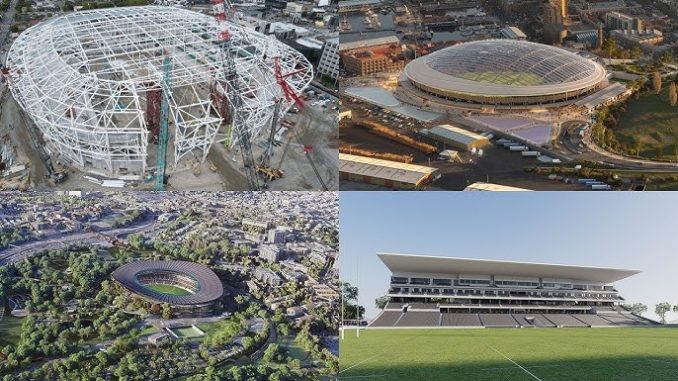
$3.2 Billion Construction Update: New Stadium Plans Under Discussion as Canberra Stadium Faces Asbestos and Concrete Cancer Issues
Canberra’s stadium situation is at a critical point, with city planners, government officials, and sports authorities actively discussing plans for a new facility. The current Canberra Stadium, which has long been a hub for sports, concerts, and community events, is facing significant structural issues, including the presence of asbestos and concrete cancer. These problems have prompted urgent conversations about the future of the venue and how best to provide a safe, modern facility for residents and visitors.
The stadium has served the Canberra region for decades, hosting rugby, soccer, and other sporting events, as well as large-scale concerts. However, over the years, structural wear and environmental concerns have compounded, leading experts to identify asbestos materials in older sections of the stadium. Asbestos, a known health hazard, requires careful management or removal to prevent exposure. At the same time, concrete cancer—a deterioration of reinforced concrete due to corrosion of the steel reinforcements—has been detected in parts of the stadium’s structure. This condition compromises the stability and safety of the facility, making major repairs increasingly urgent and costly.
In light of these issues, government and construction stakeholders have begun exploring options for a new stadium. Early discussions have focused on developing a comprehensive blueprint that would not only replace the aging infrastructure but also incorporate modern design, sustainability, and improved capacity for major events. The estimated cost for such a project is significant, with projections reaching $3.2 billion, reflecting both construction expenses and the need for state-of-the-art facilities that can meet future demands.
The proposed plans aim to address multiple challenges. Safety is the primary concern, as the existing stadium’s asbestos and concrete deterioration pose potential risks to visitors, staff, and athletes. Beyond safety, there is also an opportunity to create a venue that attracts larger national and international events, enhancing Canberra’s profile as a destination for sports and entertainment. Modern stadium designs typically include flexible seating arrangements, better accessibility for people with disabilities, advanced lighting and audio systems, and environmentally sustainable construction practices, such as energy-efficient materials and water-saving features.
Community input is also expected to play a key role in shaping the new stadium plans. Local residents, sports clubs, and cultural organizations are likely to have opportunities to provide feedback on design priorities, amenities, and overall vision for the site. This participatory approach aims to ensure that the stadium meets the needs of Canberra’s population while supporting economic growth and cultural development.
While discussions are ongoing, the timeline for construction remains uncertain. Officials emphasize that careful planning, environmental assessments, and consultation with experts will be essential before breaking ground. Meanwhile, temporary safety measures and maintenance continue to be applied to the existing stadium to ensure that it remains operational for upcoming events.
The situation highlights the broader challenge faced by aging public infrastructure across Australia. Balancing heritage and nostalgia with modern safety standards and future-proof design is a complex process, but one that Canberra is now undertaking with a focus on long-term benefits. A new stadium could not only resolve immediate safety concerns but also serve as a symbol of growth, innovation, and community pride for the city.



Be the first to comment