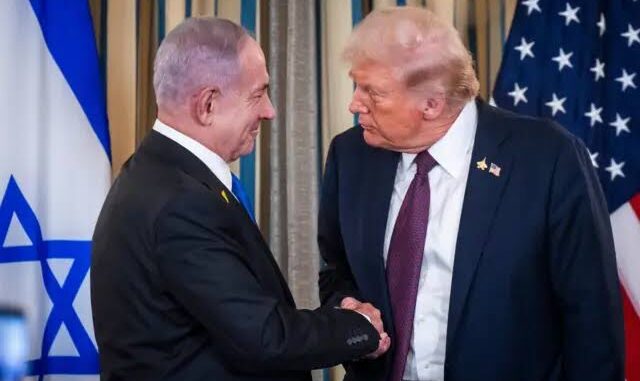
A last‑ditch White House meeting between President Donald Trump and congressional leaders ended without an agreement to prevent a looming federal government shutdown. At the same time, Trump used a separate high‑profile session with Israeli Prime Minister Benjamin Netanyahu to unveil a bold new peace plan for Gaza—one that already has Israeli backing but faces uncertain prospects with Hamas.
No Deal on Avoiding a Shutdown
Despite intensive negotiations, the White House meeting failed to bridge differences over how to fund the U.S. government beyond September 30. Republicans pushed for a clean, short‑term continuing resolution through November 21 to buy time for further talks, rejecting Democrats’ demands to include healthcare provisions, especially extensions of Affordable Care Act (ACA) subsidies.
Vice President J.D. Vance warned that the government was headed toward a shutdown, criticizing Democrats for leveraging policy demands in the funding fight. Meanwhile, Senate Minority Leader Chuck Schumer and House Minority Leader Hakeem Jeffries insisted that healthcare cuts and subsidy expirations could not be ignored, placing them at the center of Democratic red lines.
As the deadline approached, agencies were told to prepare layoff lists and furlough plans, raising the specter of widespread disruption across federal services. The impasse marked a return to a familiar script: each side accused the other of political brinkmanship, while offering little in the way of compromise.
Trump and Netanyahu Discuss Gaza Peace Plan
In a parallel initiative, Trump hosted Netanyahu at the White House to announce a 20‑point peace proposal aimed at ending the Gaza conflict. Under the plan, Israel would cease military operations and withdraw forces from Gaza contingent on Hamas’s compliance, including full disarmament and the return of all hostages (within 72 hours).
Netanyahu publicly voiced support, saying the plan aligns with Israel’s war aims: reclaim hostages, eliminate Hamas’s military and political control, and ensure Gaza never again poses a threat. He praised Trump’s approach as “bold” and endorsed its basic contours.
Yet the plan’s fate hinges on Hamas, which has not signed on. Both Trump and Netanyahu warned that refusal by Hamas would invite continued military pressure—with Trump pledging full U.S. backing for Israel’s next moves.
Key aspects include the establishment of a transitional governance mechanism, potentially involving an international board (with Trump’s involvement), and reconstruction under new oversight. The plan explicitly states Israel would not occupy or annex Gaza and that any resident wishing to leave would be free to do so—but that no one would be forced out.
Tensions, Challenges, Risks
The juxtaposition of a domestic funding crisis and an ambitious foreign initiative underscores the intensifying pressure on the Trump administration. The shutdown impasse threatens to freeze many government operations, while the Gaza plan opens a new front of geopolitical risk.
Critics argue the proposal places enormous demands on Hamas with uncertain incentives, and question the legal, humanitarian, and logistical implications of restructuring governance in Gaza. Hamas’s acceptance remains the central obstacle.
As the funding deadline looms, the coming hours may determine whether the U.S. enters a shutdown and whether Trump’s Gaza vision will gain traction or remain aspirational.



Be the first to comment