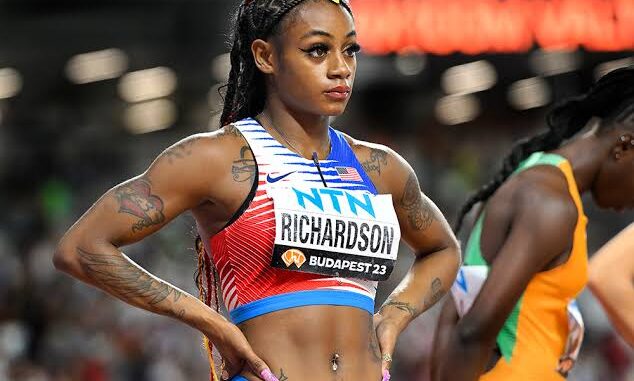
Tokyo, Japan – September 20, 2025 — U.S. sprint star Sha’Carri Richardson has ignited a firestorm in the global athletics community after sharply criticizing World Athletics for what she called “unfair and outdated” prize money standards. Speaking during a post-race interview at the Tokyo Athletics Championships, Richardson questioned why gold medalists still earn only $70,000 — a modest increase from the $60,000 awarded in 2015.
“After a decade, a $10,000 increase is insulting. We’re breaking records, filling stadiums, and driving sponsorships. Yet, we’re rewarded with pocket change compared to other global sports,” Richardson said, visibly frustrated. “It’s unfair. We risk our bodies, our time, and our careers — for what?”
Her remarks quickly went viral, with athletes, fans, and analysts weighing in across social media and sports commentary platforms. Many praised her for having the courage to speak out against a long-standing issue that many within the sport have privately discussed but rarely challenge publicly.
Richardson’s comments were especially striking given her rising prominence not only as a dominant force in the 100m and 200m events, but also as one of the most marketable and outspoken figures in track and field today. Her performances and charisma have played a significant role in boosting the sport’s visibility — particularly in the U.S., where track and field has often struggled to maintain mainstream attention outside of the Olympics.
But the controversy didn’t stop there.
Shortly after Richardson’s remarks gained traction, fellow American sprint champion Noah Lyles made a statement that further fueled the debate. Speaking at a separate media briefing, Lyles echoed her concerns but took it a step further.
“We are world champions — literally the best athletes on Earth — and yet we’re paid like amateurs. If this sport wants to grow, the system has to change. We deserve better. Period,” Lyles said. He also pointed out the vast financial gulf between athletics and sports like tennis, golf, and basketball, where top players earn millions per event.
Lyles’s comments only intensified the growing storm. Within hours, hashtags like #FairPayForAthletes and #TrackDeservesMore began trending globally. Several high-profile athletes from around the world, including European and African champions, voiced their support for the two American sprinters.
World Athletics has yet to issue an official response, though insiders suggest that the governing body is “monitoring the situation closely.”
Industry experts argue that while prize money alone may not reflect the total earning potential of elite athletes — many of whom also benefit from endorsements and appearance fees — the current prize structure fails to acknowledge the increasing demands, exposure, and professionalism of modern track and field.
As the Tokyo Athletics Championships continue, the spotlight has shifted from the track to the debate raging off it — a debate that could mark a turning point in how athletes are valued and compensated on the world stage.



Be the first to comment