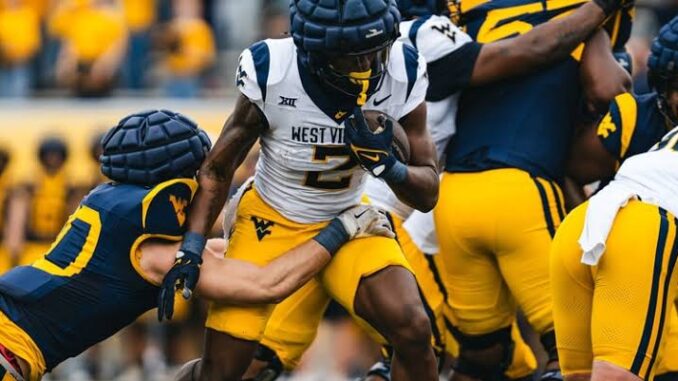
Federal judge grants injunction for four West Virginia University football players
On August 20, 2025, U.S. District Judge John Preston Bailey issued a preliminary injunction allowing four West Virginia University football players—Jimmori Robinson, Tye Edwards, Justin Harrington, and Jeff Weimer—to compete this season. This ends the NCAA’s attempt to enforce a rule that bars players from participating after five years, even if not all years involve NCAA‑member institutions like certain junior colleges .
All four players previously had waivers to play in 2025 denied. They argue that their time spent at non-NCAA junior colleges should not count against the NCAA’s standard five‑year eligibility window . Their lawsuit, filed on August 1, 2025 in the Northern District of West Virginia, accuses the NCAA of antitrust violations, contract breach, and reinforcing an unjust “JuCo penalty” that discriminates against athletes who attended non-NCAA institutions .
Judge Bailey’s ruling is part of a broader judicial trend challenging NCAA eligibility rules under antitrust scrutiny, especially in the era of NIL (name, image, likeness) compensation. He cited previous rulings favorable to similarly situated players, such as Vanderbilt QB Diego Pavia, Rutgers safety Jett Elad, and ex-Nevada WR Cortez Braham Jr., indicating that eligibility regulations are increasingly viewed as commercial in nature under the Sherman Act .
Judge Bailey also referenced his own late-2023 ruling involving college basketball players denied eligibility after transferring twice—another case in which NCAA policies were deemed anticompetitive . He noted that in the NIL era, athlete eligibility has become even more commercial, particularly in light of the House settlement earlier in 2025 that opened the door for schools to pay athletes substantial sums .
Notably, the four players were not participating in fall practices at the time of the decision, and Weimer was not even listed on the roster. The most high-profile plaintiff, Jimmori Robinson, spent 2024 at UTSA, where he recorded 10.5 sacks, 17 tackles for loss, and earned American Athletic Conference Defensive Player of the Year honors. His immediate addition at a “hybrid‑linebacker” position would be a major boost for the Mountaineers under new coach Rich Rodriguez, though questions about Robinson’s academic record at UTSA were raised by NCAA attorneys—though not fully detailed in court .
The NCAA and WVU athletics declined to comment after the ruling, and it remains to be seen how the NCAA will respond or whether this decision will be appealed .
This ruling deepens the ongoing legal debates over NCAA eligibility rules and reaffirms a shifting legal view: in the modern NIL landscape, athlete eligibility restrictions are increasingly treated like commercial regulation—putting them squarely under antitrust scrutiny.


Be the first to comment