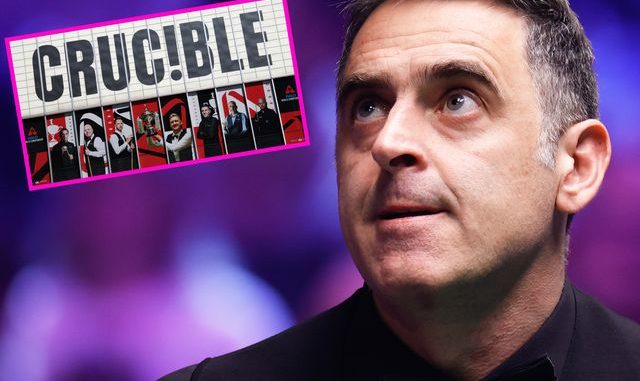
Ronnie O’Sullivan is one of the greatest players ever to pick up a cue, but even legends can get it wrong. His suggestion that the World Snooker Championship should move away from the Crucible Theatre ignores something fundamental: sport is not just about space, money, or modernization—it is about identity, history, and atmosphere. And nowhere embodies those qualities better than the Crucible.
Since 1977, the Crucible has been synonymous with snooker’s most prestigious event. It is not just a venue; it is part of the drama. The tight, intimate setting creates a pressure unlike anything else in the sport. Players often talk about how every cough, every shuffle, every moment of silence feels magnified. That intensity is not a flaw—it is precisely what makes winning there so meaningful. A World Championship victory at the Crucible carries a psychological weight that simply cannot be replicated in a larger, more commercial arena.
Sheffield itself has become inseparable from the tournament. The city lives and breathes snooker every spring. Fans travel from across the globe not just to watch matches, but to experience a tradition. Generations of supporters associate their love of the game with that iconic stage. Moving the championship elsewhere risks severing that emotional connection, turning something deeply rooted into just another traveling event.
There is also the matter of legacy. When you think of the Crucible, you think of historic moments: black-ball finishes, shocking upsets, and the rise of unknown qualifiers into champions. These moments are etched into the theatre’s walls. The venue acts as a living archive of the sport’s greatest stories. Relocating the tournament would not erase that history, but it would dilute its continuity. Future champions would not be adding to the same story—they would be starting a new, lesser one.
Of course, arguments for change often revolve around capacity and revenue. The Crucible is relatively small, and demand for tickets far exceeds supply. But bigger does not always mean better. Expanding purely for financial gain risks losing the unique character that sets snooker apart from other sports. Not every event needs to be a spectacle in a massive arena; sometimes, intimacy is the spectacle.
Moreover, the idea that the tournament must evolve geographically to remain relevant underestimates the global appeal of tradition. Wimbledon has its grass courts. Augusta has Amen Corner. The Masters at the Crucible belongs in that same category of sporting constants. These venues are not limitations—they are defining features.
In the end, Ronnie O’Sullivan may be thinking about the future, but the future of snooker does not require abandoning its soul. The Crucible Theatre is more than capable of carrying the World Snooker Championship forward, precisely because of what it represents. Some traditions are worth preserving, not out of stubbornness, but because they are the very reason the sport matters in the first place.



Be the first to comment