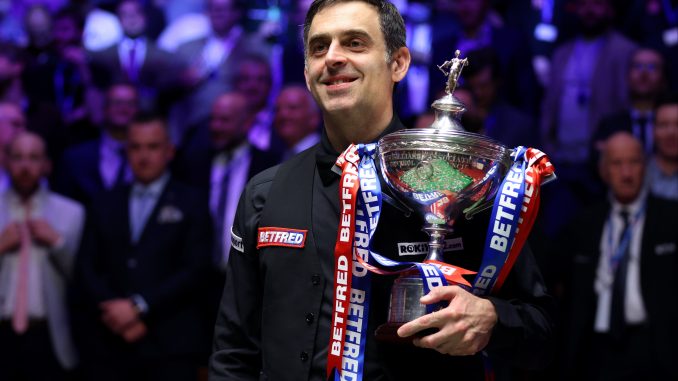
From Ronnie O’Sullivan’s pursuit of an eighth world title at 50 to Earl Strickland hailing Efren Reyes as the greatest ever to pick up a cue in Manila, these legends continue to dominate the headlines. Whether on the snooker table or in the pool hall, these icons are far from finished.
Age, in cue sports, has never been the barrier many assume it to be. Precision, temperament, tactical intelligence, and nerve under pressure often sharpen with time. Few embody that truth more vividly than Ronnie O’Sullivan. Decades into his professional career, he is still chasing history with the same audacity that defined his teenage breakthrough. The idea of an eighth world title at 50 is not just a statistical milestone; it is a statement about longevity, reinvention, and competitive hunger. O’Sullivan has evolved from prodigy to master craftsman, relying not only on raw talent but on experience, match awareness, and mental resilience.
Across the cue sports world, a similar reverence surrounds Efren Reyes. In Manila, where pool is woven into the cultural fabric, Reyes is more than a champion — he is folklore. When Earl Strickland, himself one of the fiercest competitors the game has ever seen, calls Reyes the greatest to ever pick up a cue, it carries weight. Strickland’s praise is not casual admiration; it is the recognition of genius from one legend to another. Reyes’ creativity, touch, and seemingly impossible shot-making transformed how pool is played and perceived. His influence stretches beyond trophies, shaping generations who grew up studying his patterns and ingenuity.
What makes these figures compelling is not nostalgia but relevance. They are not simply celebrated for what they once were; they remain active participants in the present narrative of their sports. Crowds still gather when they compete. Young challengers measure themselves against them. Broadcasters still lead with their names. In an era increasingly focused on youth and rapid turnover, these veterans offer a different story — one of endurance.
Their continued presence also bridges generations. For long-time fans, they represent continuity, a living connection to defining moments of the past. For newer audiences, they are benchmarks of greatness, standards against which modern stars are judged. The blend of past glory and present ambition keeps the conversation alive.
Cue sports, perhaps more than many others, reward accumulated wisdom. Shot selection, safety play, psychological warfare — these are arts refined over thousands of frames and racks. The legends understand pace, momentum, and pressure in ways that only time can teach. That knowledge allows them to remain dangerous opponents, capable of brilliance when it matters most.
Ultimately, the headlines they generate are about more than titles or praise. They are about the enduring allure of mastery. As long as Ronnie O’Sullivan lines up a break and Efren Reyes’ name echoes in conversations about greatness, the message is clear: true icons do not fade quietly. They compete, inspire, and remind the world that greatness has no expiration date.
Be the first to comment