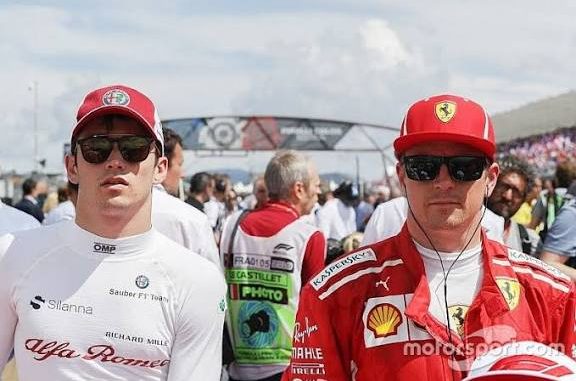
The Formula 1 paddock is no stranger to controversy, but few topics ignite debate quite like comparisons between drivers—especially when they involve Ferrari, Kimi Räikkönen, and Charles Leclerc. Recent comments from the FIA president drawing parallels between Räikkönen and Leclerc have stirred strong reactions across the F1 community. At the heart of the uproar lies a deeper question: what separates a legend from a leader?
To understand the sensitivity, one must first appreciate what Kimi Räikkönen represents in Formula 1 history. The 2007 World Champion remains Ferrari’s last drivers’ title holder, a fact that alone cements his legacy in Maranello folklore. Räikkönen embodied raw speed and an almost mythical coolness under pressure. His no-nonsense radio messages and understated demeanor made him both a cult hero and a symbol of authenticity in a sport increasingly shaped by PR polish. For many fans, Räikkönen is more than a champion—he is an icon of an era.
Charles Leclerc, by contrast, represents Ferrari’s present and future. Since joining the Scuderia in 2019, he has been positioned as the team’s long-term cornerstone. Blisteringly quick over one lap and emotionally invested in Ferrari’s fortunes, Leclerc carries not just talent but expectation. He is tasked not merely with winning races, but with restoring Ferrari to championship glory. That burden alone places him in a different narrative category.
So why did the comparison spark controversy?
Because comparisons in F1 are rarely neutral. When the FIA president suggested similarities—or distinctions—between Räikkönen’s legendary status and Leclerc’s leadership qualities, many interpreted it as diminishing one to elevate the other. Some fans saw it as unfair to Leclerc, who is still building his career and has yet to claim a world title. Others felt it reduced Räikkönen’s impact to statistics rather than acknowledging his cultural imprint on the sport.
The backlash underscores a fundamental distinction: a legend is often defined by achievement and mythos, while a leader is defined by influence and responsibility in the present tense. Räikkönen’s legend was forged through a championship, fearless racecraft, and an aura that transcended team politics. Leadership, however, is about guiding a team through adversity—something Leclerc has been increasingly asked to do.
Ferrari’s struggles in recent seasons have magnified this difference. Leclerc has had to publicly shoulder strategy missteps, reliability failures, and development shortfalls. He speaks diplomatically, protects the team’s image, and projects unity. That is leadership. Yet without a championship, critics argue, legendary status remains out of reach. In Formula 1, titles are the ultimate currency.
The uproar also reflects the modern F1 ecosystem. Social media accelerates emotional reactions, and Ferrari’s global fanbase amplifies every perceived slight. Any suggestion that one driver’s contribution outweighs another’s becomes fodder for tribal debate. Add to that the political sensitivities of the FIA president weighing in on driver comparisons, and controversy becomes inevitable.
There is also a generational dimension. Räikkönen belongs to a transitional era between the analog grit of early-2000s racing and today’s hyper-analyzed, data-driven environment. Leclerc operates in a world of constant scrutiny, media obligations, and technical complexity. Comparing them without context risks oversimplifying both.
Ultimately, the debate reveals more about Formula 1 culture than about either driver. Fans crave narratives—heroes and successors, legends and heirs. But legacy is not static. Leclerc’s story is still being written. Should he deliver Ferrari’s long-awaited championship, the “legend vs leader” debate may dissolve entirely.
For now, the controversy serves as a reminder: in Formula 1, words carry weight. Comparing eras, personalities, and achievements is rarely just analysis—it is identity. And when Ferrari is involved, identity is everything.



Be the first to comment