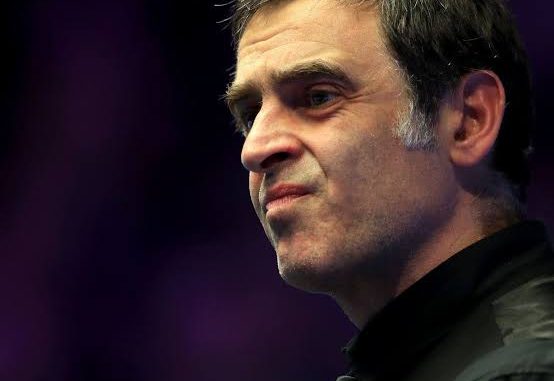
Ken Doherty argues that snooker’s enduring appeal transcends individual superstars, noting that the sport successfully continued after Alex Higgins and will thrive beyond the Ronnie O’Sullivan era. While acknowledging O’Sullivan as a long-term “talisman,” Doherty believes new.
“The game is bigger than any one person. It survived when Alex Higgins was finished. And the game will always survive.” These words, spoken by Ken Doherty, carry a weight that resonates deeply within the snooker world. Snooker, a sport steeped in history, drama, and larger-than-life personalities, has often relied on iconic figures to capture the public imagination. Yet, as Doherty emphasizes, the essence of the sport goes far beyond any single individual.
The recent absence of Ronnie O’Sullivan, snooker’s most electrifying and controversial talent, has sparked conversations about the future of the game. O’Sullivan, with his unparalleled skill and mercurial temperament, has dominated headlines and tournament tables for decades. Fans have grown accustomed to his flair, his breaks of genius, and, at times, his unpredictable behavior. Naturally, his hiatus raises the question: what happens to snooker when its biggest star steps away? Doherty’s perspective is reassuring. The sport doesn’t hinge on one man’s presence; it thrives on the collective talent and ambition of its players.
In the current landscape, emerging stars are stepping into the spotlight, proving that the game’s vitality is not only intact but evolving. Players like Judd Trump, Mark Selby, and Neil Robertson have consistently shown that they can deliver the high-caliber performances that fans expect. Meanwhile, a new wave of talent—people such as Zhao Xintong, Luca Brecel, and Yan Bingtao—is pushing the boundaries further, bringing fresh styles and international flair. These players are not just filling gaps; they are redefining what it means to compete at the highest level. Doherty’s words remind us that snooker has always survived the departure of legends because it is, at its core, bigger than any one person.
History offers a poignant example. Alex Higgins, the “Hurricane,” transformed snooker with his flamboyant play and charismatic presence. When his career declined, many feared for the sport’s popularity. Yet, snooker endured, adapting and evolving with new champions, new rivalries, and a global audience that continued to grow. The cycle repeats itself. Icons may come and go, but the sport’s structures, tournaments, and culture persist, carried forward by those ready to take up the mantle.
Doherty’s comments are also a subtle nod to responsibility. Emerging stars are not only inheriting a game; they are custodians of its legacy. The mantle they carry is one of both opportunity and expectation: to honor the traditions of snooker while inspiring the next generation. The game’s survival, in this sense, is a shared mission. Fans, promoters, and players alike contribute to a continuum that ensures snooker’s place in the sporting world, irrespective of individual careers.
Ultimately, snooker’s story is one of resilience and reinvention. The stage may shift, stars may change, but the game itself endures. As Ken Doherty observes, the focus should not be on what is lost in O’Sullivan’s absence, but on the promise offered by the players stepping forward. The game, larger than any single player, marches on—vibrant, evolving, and very much alive.



Be the first to comment