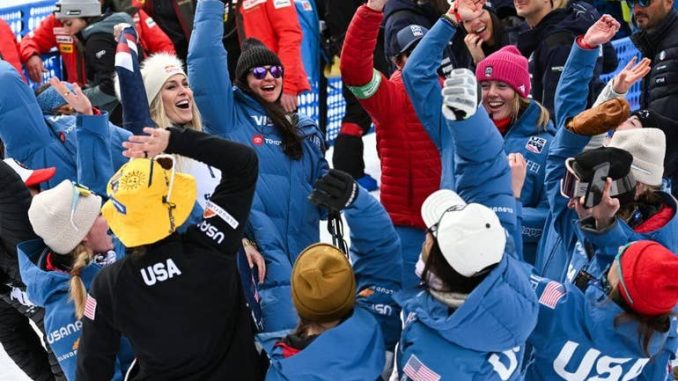
Four years ago at the Beijing Winter Olympics, the U.S. women’s alpine ski team revolved almost entirely around Mikaela Shiffrin. Despite her status as the most successful skier in history, the rest of the roster entered the Games as long shots for medals. If anyone other than Shiffrin reached the podium, it would have required an extraordinary break. The result underscored that imbalance: for the first time since 2002, the U.S. women left the Olympics without a single alpine medal.
As the 2026 Winter Games approach, the picture is dramatically different. The United States has emerged as the sport’s deepest and most consistent women’s program. Shiffrin and a resurgent Lindsey Vonn continue to anchor the team, but podium finishes now routinely feature multiple Americans. In January alone, Shiffrin captured another World Cup slalom victory while Paula Moltzan finished second, and days earlier Vonn won a downhill with Jacqueline Wiles close behind in third. By midseason, the U.S. women led the Nations Cup standings in overall points, downhill and slalom territory typically dominated by European powerhouses like Switzerland and Austria.
The team’s transformation reflects genuine depth across both technical and speed disciplines. According to U.S. Ski & Snowboard leadership, the shift is substantial: where the program once relied on one or two medal hopes, it now fields several legitimate contenders in nearly every event. Head coach Paul Kristofic, who guided the program through lean years, credits not only elite results at the top but also a strong pipeline of young talent coming through the system.
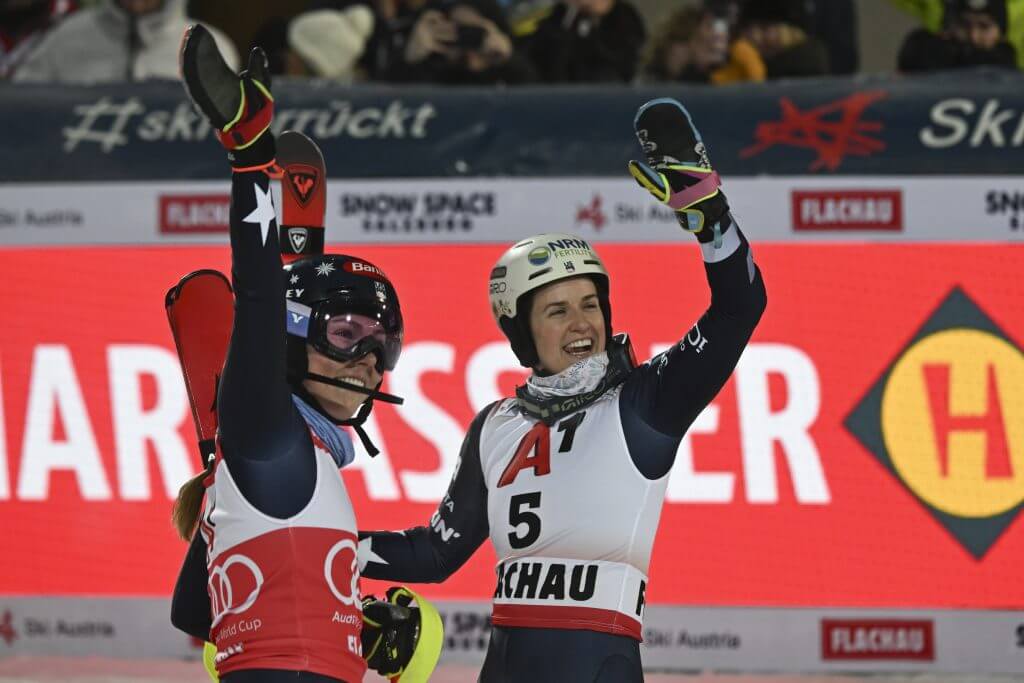
No single factor explains the turnaround. Vonn’s remarkable comeback after retirement and knee replacement surgery has reestablished her as a dominant force in downhill and super-G. Shiffrin remains the standard-bearer in slalom. Moltzan’s resurgence after being cut from the national team and rebuilding her career in college has added crucial strength in technical events. Breezy Johnson’s return from ACL surgery has restored world-class speed credentials, while Nina O’Brien has become a reliable podium threat in giant slalom. Injuries, such as Lauren Macuga’s season-ending ACL tear, remain part of the sport, but overall health has finally aligned in the team’s favor.
Structurally, the program has also evolved. After Beijing, high-performance director Anouk Patty introduced a more corporate-style emphasis on accountability, coaching changes and cross-discipline collaboration. Investment has increased in coaching staff and in development opportunities, particularly on the Europa Cup circuit, to ensure athletes are not rushed into World Cup competition before they are ready. The aim is sustainability rather than a short-lived peak.
The U.S. women have experienced a golden era before, notably at the 2010 Vancouver Games, but that success faded as stars aged without a comparable next generation. This time, leaders believe the foundation is broader and more resilient. While the ultimate judgment will come in Italy at the Olympics, confidence within the program is high. For the first time in years, American women’s alpine skiing appears built not on hope or luck, but on depth, structure and sustained excellence.
Be the first to comment