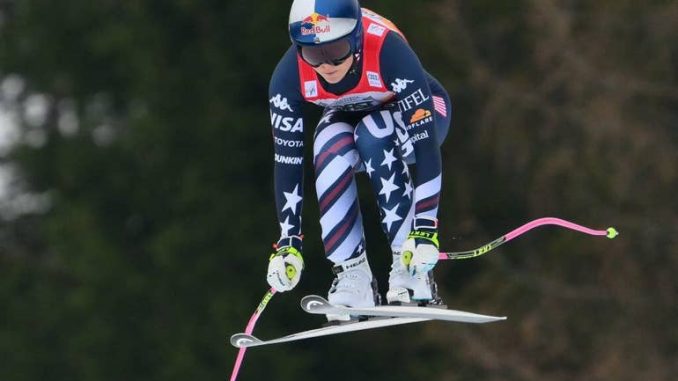
Lindsey Vonn’s pursuit of another Olympic medal at age 41 represents one of the most extraordinary comebacks in modern sport. An Olympic champion and enduring icon, Vonn has rebuilt her career after years of physical breakdown, culminating in a return to elite Alpine skiing following a partial knee replacement in 2024.
Five years after retiring in pain, Vonn now races at speeds exceeding 80 miles per hour with a titanium implant in her right knee. Initially, the surgery was intended only to restore her ability to live an active life without chronic pain. At the time, a competitive comeback was not part of the plan. But within months, Vonn’s knee felt better than it had in decades, prompting her to reconsider what might still be possible.
Her doctors, Martin Roche and Thomas Hackett, could offer little precedent. No athlete had previously subjected a partially replaced knee to the extreme forces of World Cup downhill skiing. Unlike most patients, Vonn became a real-time experiment in the limits of orthopedic technology. Despite the unknowns, she felt confident enough to push forward, trusting both her body and the science behind the procedure.
That confidence has been rewarded. Roughly 20 months after surgery, Vonn leads the World Cup downhill standings with multiple wins and podium finishes. She is now among the favorites for gold in downhill and super-G at the 2026 Winter Olympics in Cortina d’Ampezzo, as well as a contender in the combined event.
Her success has surprised even those most familiar with her medical history. Doctors closely monitoring her progress acknowledge they are learning from her case, particularly about how much stress a partial knee implant can withstand over time. Unlike total knee replacements, which would make elite competition impossible, partial replacements preserve healthy compartments of the knee and retain natural ligaments, offering greater stability and muscle control.
Vonn’s longtime coach, Chris Knight, initially struggled to structure her training due to the uncertainty surrounding her knee’s capacity. As it turned out, the rebuilt joint proved more durable than her original one. Over months of intensive training, she tolerated a workload that would have been unthinkable before surgery.
The procedure itself relied on robotic-assisted technology developed to precisely remove damaged bone and insert titanium components with exact alignment. In Vonn’s case, this approach restored full extension, eliminated long-standing pain, and allowed her to fully engage her leg muscles again. Her rapid recovery was accelerated by relentless physical therapy and conditioning.
While Vonn accepts that she is an outlier, her doctors believe her case demonstrates what is possible when advanced technology is paired with exceptional preparation and rehabilitation. Still, they watch her races with equal parts admiration and concern, aware of the risks involved at such high speeds.
For Vonn, the comeback is about more than medals. After years of surgeries and setbacks, she now has two functional knees for the first time in over a decade. That has reopened doors she once thought permanently closed. She understands the uncertainties but feels no fear, confident that her titanium implant will endure the pressure.
Her story fits a familiar arc fall, rebuild, and rise again but this chapter carries broader meaning. By pushing the limits of medical science in full public view, Vonn hopes her journey leaves a legacy beyond ski racing, offering inspiration to anyone facing physical setbacks and wondering what might still be possible.



Be the first to comment