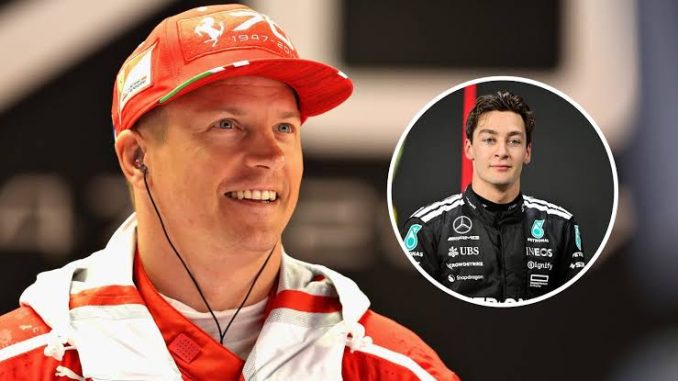
George Russell offers a heartfelt and unsettling explanation for why Kimi Räikkönen might not be as popular if he broke into F1 today.
George Russell has provided a heartfelt and unsettling perspective on why Kimi Räikkönen, the legendary “Iceman” of Formula 1, might not enjoy the same popularity if he were breaking into the sport today. Known for his calm, stoic demeanor and refusal to play the media game, Räikkönen became a fan favorite not because he sought attention, but precisely because he resisted it. Russell’s comments highlight how dramatically the environment of Formula 1 has changed, and how different personalities are perceived in the modern era.
Räikkönen’s rise in F1 was marked by authenticity. He spoke little, smiled rarely, and focused almost entirely on his performance on the track. This was refreshing to fans who were tired of over-the-top interviews and carefully curated public personas. Russell suggests that today’s F1 is far less forgiving of that kind of reserved, private personality. Modern drivers are expected to maintain constant visibility, connect with fans online, and present themselves as approachable personalities both on and off the track. In such a landscape, someone like Räikkönen might be misunderstood, or worse, seen as aloof or disinterested.
“The paddock today is almost like a social media stage,” Russell noted. “Drivers aren’t just athletes; they’re brands, entertainers, and influencers. The quiet, straightforward type doesn’t always fit that mold.” He expressed concern that the charm Räikkönen carried effortlessly — his honesty, his refusal to overcomplicate things, his focus on racing — might be undervalued or even penalized in the current climate.
Russell’s observation is unsettling because it suggests that F1’s evolution may have narrowed the type of personalities that can achieve widespread popularity. Where once individuality was celebrated, now constant engagement and public visibility are often considered essential. Fans today may form connections primarily through Instagram posts, TikTok videos, and media soundbites, rather than the subtle charisma a driver like Räikkönen naturally exuded on the track.
Yet Russell’s comments are not a critique of today’s drivers. Instead, they are an acknowledgment of the pressures and expectations that modern F1 athletes face. The sport has expanded globally, with audiences now demanding access to every part of a driver’s life. While this growth has many positives, it also leaves less room for those who prefer to let their racing speak for itself.
Ultimately, Russell’s reflections serve as both a tribute to Kimi Räikkönen and a cautionary note about Formula 1’s current trajectory. The Iceman’s appeal was rooted in authenticity, quiet confidence, and resistance to performative behavior. If he were entering the sport today, his natural demeanor might not resonate as widely, which Russell finds both disappointing and revealing. It is a reminder that while the sport evolves, the qualities that once defined its heroes may not always translate in a world dominated by constant attention and curated images.
Kimi Räikkönen may remain a legend in history, but Russell’s words suggest that the Iceman’s unique appeal is something of a relic — a reflection of a time when being oneself was enough to capture the hearts of fans around the world.



Be the first to comment