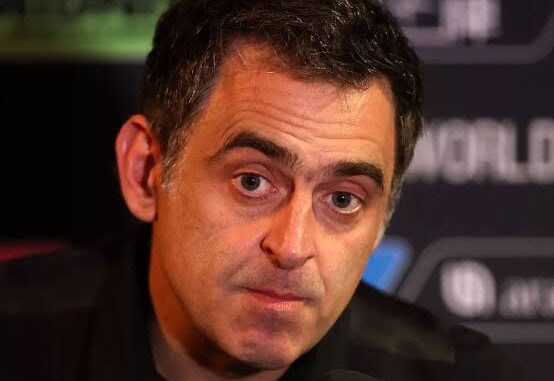
Ronnie O’Sullivan has made shocking announcements about withdrawing from recent tournaments, citing medical reasons and anxiety.
Seven-time world snooker champion Ronnie O’Sullivan has made several startling announcements in recent months about withdrawing from competitive tournaments, citing both medical issues and anxiety-related problems. Although his on-table success remains formidable, his off-table disclosures offer a window into the pressures of elite sport.
The withdrawals
At the Welsh Open in Llandudno, O’Sullivan announced via social media that he would not play, explaining:
> “For years I’ve suffered from stage fright at times, brought on by anxiety. It’s not something I can predict or control…”
He apologised to ticket-buyers, saying he “just can’t get my cue out when I feel like this”.
At the German Masters he similarly withdrew “due to medical reasons”. In his comments he referenced exhaustion after a long overseas exhibition trip.
For the World Grand Prix in Hong Kong, the World Snooker Tour (WST) confirmed his withdrawal on medical grounds; this was his seventh ranking-event withdrawal of that season.
At the British Open he again pulled out citing medical reasons, having not competed since mid-August.
His explanation & context
O’Sullivan has been candid about his motives. He wrote on X (formerly Twitter):
> “I realise plenty of people who bought tickets … will have been frustrated when I withdrew … I’ve been trying to prioritise my health and well-being, which sometimes means making last-minute decisions not to play. It’s never an easy decision and I hate letting people down.”
He described the decision to withdraw from the Masters as “a nightmare decision really to make … I just think the build-up of all that kind of just got a bit too much really.”
Importantly, with the Welsh Open announcement he explicitly linked withdrawal to anxiety and “stage fright” rather than purely physical health.
Why this matters
O’Sullivan is widely regarded as one of snooker’s greatest players, yet his recent pattern of withdrawals highlights that even the elite are vulnerable to mental and physical strain.
His commentary that “it’s hard to explain but for years I’ve suffered from stage fright …” shows that anxiety can affect performance despite obvious talent and success.
For promoters, broadcasters and fans, the last-minute nature of some withdrawals has been frustrating — but his apology shows awareness of the impact on the sport’s ecosystem.
The fact that many of the events he withdrew from were ranking tournaments (with titles and ranking points at stake) suggests the issue is significant, not simply selective absence.
What to watch
Whether O’Sullivan will return to a more consistent schedule of appearance in ranking events.
How his mental-well-being strategy evolves (e.g., fewer events, better rest, fewer exhibitions).
What this signals for player-welfare in snooker: for example, support for mental health, managing travel/fatigue, and balancing exhibition commitments with tournament play.
How fans and organisers adapt expectations: if an iconic figure is now intermittently absent, the sport may need to adjust how they communicate and plan around such risks.
In summary, Ronnie O’Sullivan’s recent announcements reflect a shift in his priorities: from seeking every trophy to looking after himself. Whether this is a temporary phase or signals a long-term change remains to be seen — but the openness about anxiety and health is a significant moment for snooker and elite sport more widely.

Be the first to comment